Regardless of rising costs, driver shortages and other operational challenges, one thing remains unchanged: school transportation fleets run on trust.
- Families trust districts to give their children a safe, reliable ride to and from school.
- Administrators trust their transportation departments to fulfill that trust with every trip.
- Transportation teams trust their fleet data to reflect real-world operations.
Keeping that trust as strong as it’s been for decades requires modern visibility into who’s on board which bus. According to this 2026 State of Student Transportation report, 33% of school districts are prioritizing student ridership tracking technologies. This report shares survey responses from 118 student transportation fleet leaders and was coordinated in partnership between Zonar and Student Transportation News (STN).
Fleets without reliable, digital ridership data feel the gap. But fleets that have it are using it to better communicate with families, as well as keep drivers accountable for safely picking up and dropping students.
Why does not tracking student ridership carry a heavy cost?
A 2025 The Associated Press-NORC Center for Public Affairs Research report said “Nine in 10 school administrator respondents say the number of students who qualify for free, school-provided transportation is either growing (44%) or has stayed the same (46%) in the last 5 years, and 45% expect the need to keep increasing over the next 5 years.”
And yet, transportation teams are expected to keep up while most have already been impacted by budget shortfalls and staff shortages. The people who work for school bus fleets who use manual rider manifests (or no manifests) feel the impact directly.
- Administrators struggle to help emergency responders quickly.
- Dispatchers rely on paper manifests and calling drivers for status updates.
- Drivers are left vulnerable to mistakes that could cost their careers.
These gaps can escalate quickly, with student safety being put on the line.
Parent calls to the transportation department pull staff away from other tasks on a normal day. When there’s a route delay or emergency, call volumes spike. Already short-staffed teams are overwhelmed and underequipped to provide concrete answers.
And then there’s safety.
When something goes wrong, manual incident manifests are harder to pull together. Drivers and dispatchers rely on their memory instead of ridership data. In rare but serious cases of missing students, looking for that student takes longer without a way to determine if that student got on the bus or where they disembarked.
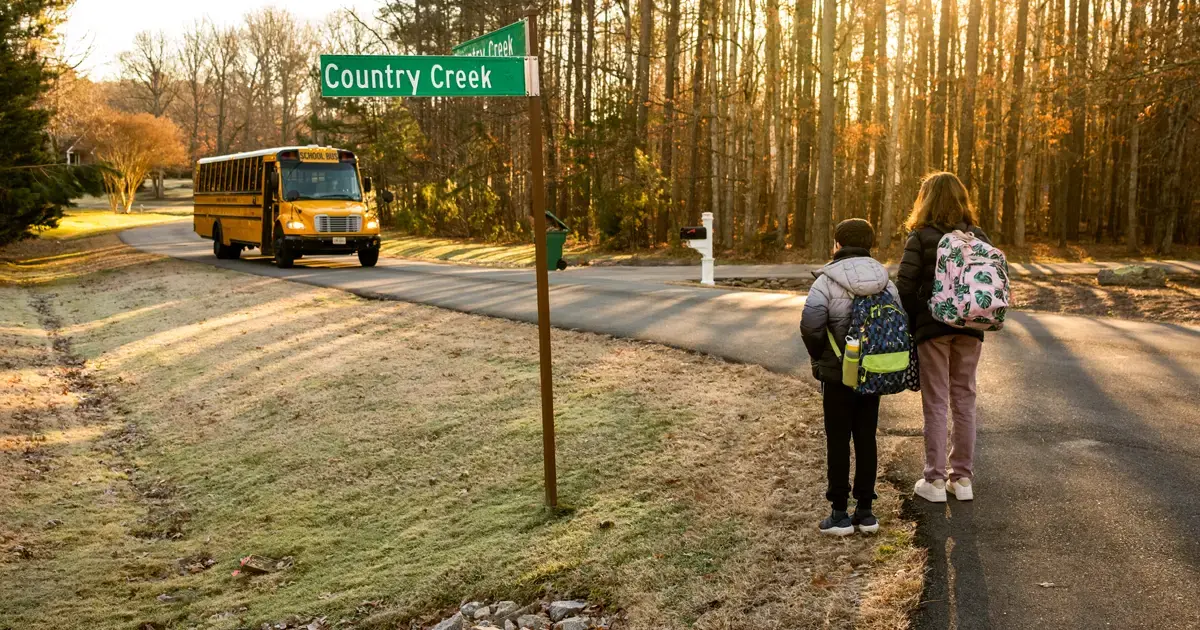
Tragically, there have also been instances of mistaken identity that caused more heartache than necessary. In March 2026, a six-year-old girl was found walking alone, along a busy highway, after a school bus driver let her off at the wrong stop.
The issue boils down to visibility.
- Can you tell who’s on which bus?
- How reliable is that information?
- How quickly can you pull it?
For example, the New York City Department of Education requires drivers and contractors to provide emergency responders with the exact number of passengers on the bus, and to identify students with special needs during accidents or emergencies.
The cost of not tracking student ridership is student rider safety. Delayed responses, preventable risk, lost trust with families and communities...not knowing who’s on board and who was dropped off where, and when, opens the door for serious, possibly tragic, safety incidents.
Why does modern family trust need school bus ridership visibility?
Families have trusted school bus fleets for good reason. As it has been for decades, student transportation remains one of the safest modes of travel.
According to the National Highway Traffic Safety Administration (NHTSA), “Each school day, millions of children ride school buses…Less than 1% of all traffic fatalities involve children on school transportation vehicles.” Today’s expectations are higher. Now that people can track numerous aspects of life in real time, they expect the same visibility into their child’s transportation.
They can track their incoming rideshare drivers, why not their child’s bus?
Nothing is more important to a student transportation fleet than student rider safety. That’s why they maintain strict procedures for clear accountability. But not being able to provide instant updates can erode trust, especially during delays and incidents.
School bus ridership data supports transportation departments’ procedures and accountabilities, and helps school districts maintain families’ trust.
- Accurate boarding data shows who’s on which bus.
- Exit data shows where they disembarked.
- Time stamps show when each event occurred.
For drivers, they have an extra layer of support if a student skips the bus or if there’s any question of where that student got off. Who among us never went to a friend’s house after school? For administrators, having this information at hand at a moment’s notice, without having to call the driver, means they can respond faster during emergencies. These verifiable records also stand up to audits, incident reviews, and parent concerns.
And that explains why student transportation fleets are shifting their 2026 technology priorities to include ridership tracking.
Why are school fleets prioritizing student ridership tracking in 2026?
The 2026 State of Student Transportation Report brings this shift sharply into focus.
Of those surveyed:
- 41% currently use student ridership tracking
- 33% consider it a near-term investment
That gap is larger than any other technology category. Prioritizing student ridership tracking technology is a response to today’s pressure for greater visibility and student rider safety. That includes pressure from school administrators, communities, student transportation teams, and families.
- Driver shortages force teams to operate at full strength with fewer people.
- Families expect transparency into their children’s bus route and location.
- School administrators are responsible for outcomes they can’t afford to explain after the fact.
Budget constraints leave little room for error in risk and liability, but ridership data provides verifiable clarity.
- Teams can find and eliminate routing inefficiencies by looking at actual trips and ridership.
- Transportation departments can quickly answer parent calls without calling drivers for an update.
- School administrators and staff are better able to plan for emergencies and respond quickly with digital manifests in hand.
Ridership data reduces manual verification of who’s on which bus, and supports faster answers during disruptions such as weather delays or late school starts.
Student transportation fleets who transport students with disabilities can also use ridership tracking to more accurately capture that ridership data for more accurate Medicaid reimbursement. Pulling the data to file their documentation becomes easier and the odds of an audit are lowered.
How does ridership visibility also help with real-world route planning?
Ridership data is more than a matter of student safety. Data that shows who’s actually riding and where riders get on and off also informs more efficient route planning. Combining ridership data with GPS vehicle tracking shows actual route and performance.
- Distinguish assumed riders from students who actually ride.
- Find ghost stops and empty seats that stretch routes.
- Adjust stops, times, and vehicle capacity based on actual demand.
The result? More accurate ETAs, better bus utilization, and fewer wasted miles.
Pressure to do more with fewer people and resources is unlikely to ease any time soon. With budget constraints and skyrocketing fuel costs as constant challenges, every ounce of fuel reduction counts more than it did last year. And with staffing shortages in the field and back-office, making it easier to find critical efficiencies is yet another advantage for fleets that use ridership tracking technologies.
How can you plan your next steps for using ridership visibility?
Today’s student transportation now consists of small teams managing complex systems under constant pressure to be budget-minded and flawlessly reliable.
Student ridership visibility is no longer optional, but expected. Moving into the year ahead, transportation teams are choosing technologies that open a clear line of sight into operations without straining their already overwhelmed staff.
Who’s on the bus? Where did they board? Where and when did they exit? Tools that answer these simple questions are now priority. Having this fundamental information, like we do for packages and groceries ordered online, is now essential for protecting students and the trust that student transportation has rightfully earned.
We built our student ridership tracking solution, Zonar Z Pass®, to provide student transportation teams visibility without making their jobs more complex. When a student boards and exits the bus, they scan their school-issued I.D. card to the Z Pass reader, which sends a time-stamped record of where that scan took place, to the cloud for authorized personnel to see. Districts and transportation departments balancing staffing shortages, tight budgets and high expectations, can trust that digital, on-demand data to tell what they need to know, at a moment’s notice.
Plus, if the school district provides families with a parent app for tracking their child’s school bus route, parents can see the boarding and exiting scan data, too. Extra peace of mind and student safety all around.
To learn more about how you can improve your student ridership visibility, contact us or get pricing.
Helpful reading