Fleet management is the process of monitoring, maintaining, and optimizing the vehicles, drivers, assets, and workflows that keep an organization moving. It can include GPS tracking, maintenance planning, driver behavior monitoring, route management, compliance support, fuel reporting, and customer communication.
For businesses that rely on vehicles every day, fleet management can help improve visibility, reduce manual work, control costs, support safer operations, and deliver better service to customers.
What Does Fleet Management Include?
Fleet management covers the tools and processes used to keep vehicles operating safely, efficiently, and reliably. Depending on the business, that may involve managing a small group of service vehicles, a delivery fleet, heavy-duty trucks, trailers, equipment, or mixed assets across multiple locations.
Common fleet management responsibilities include tracking vehicle location, monitoring maintenance needs, reviewing driver behavior, planning routes, managing fuel use, documenting inspections, and responding to issues in the field.
Why fleet visibility matters
Without clear fleet data, managers often have to rely on phone calls, paper records, spreadsheets, and delayed reports. A fleet management system can bring important information into one place so teams can make faster, more informed decisions.
Benefits of Fleet Management
Fleet management can support several important business goals, from cost control to customer service. The exact impact depends on the fleet size, vehicle types, operating model, and how consistently the system is used.
- Reduced costs: Better visibility into fuel use, maintenance needs, idle time, routing, and driver behavior can help teams identify opportunities to reduce waste and avoid unnecessary expenses.
- Improved efficiency: Fleet management tools can help teams optimize routes, schedule maintenance, assign nearby vehicles, and reduce manual coordination.
- Reduced risk: Location tracking, driver coaching, maintenance alerts, and safety reporting can help managers identify issues before they become larger problems.
- Improved customer service: Better vehicle visibility can help teams provide more accurate arrival updates, respond faster to urgent calls, and assign the right vehicle or crew to the right job.
Types of Fleet Management Tools
Fleet management systems can include a variety of tools depending on what the organization needs to manage. Some fleets need simple GPS visibility, while others need a more complete platform for safety, maintenance, compliance, reporting, and video telematics.
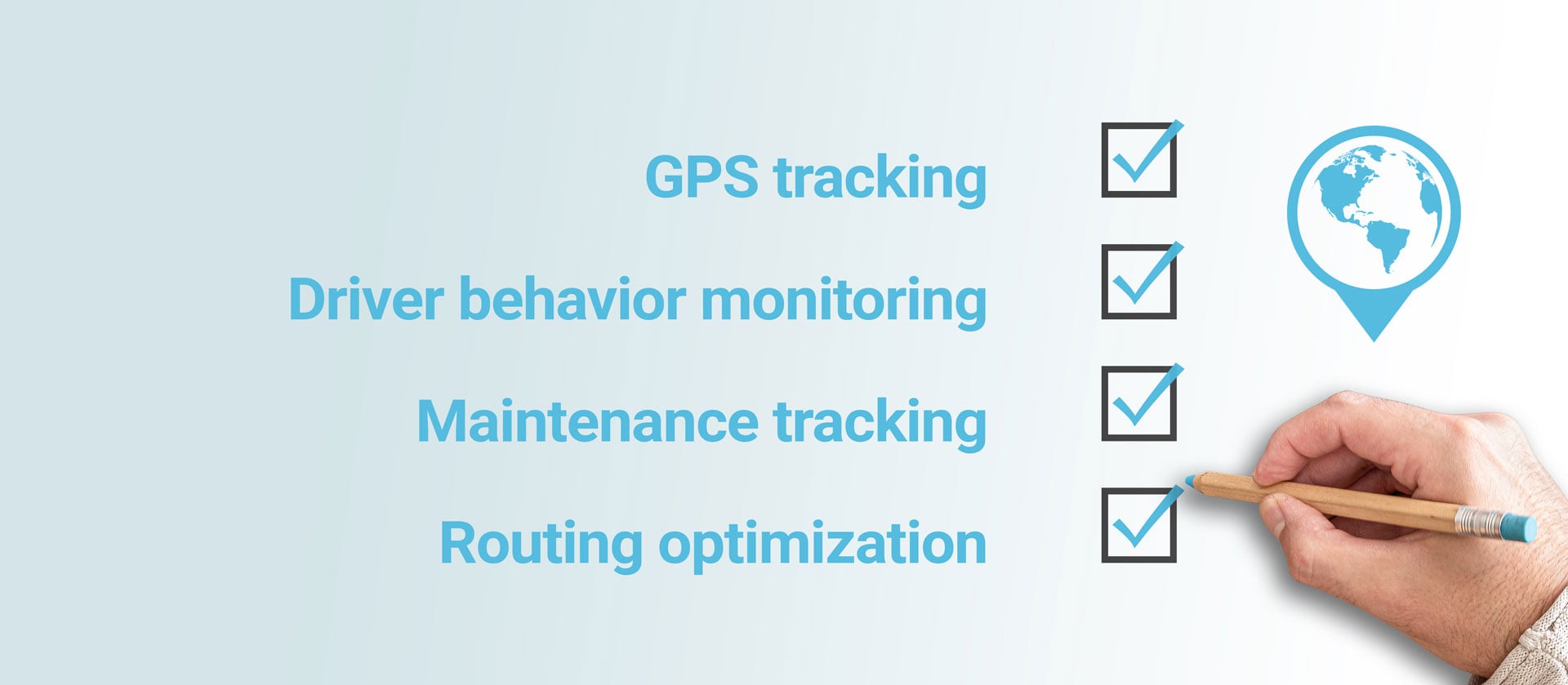
- GPS tracking: GPS tracking helps managers see where vehicles are, review route history, and understand how vehicles are being used.
- Driver behavior monitoring: Driver behavior tools can help teams review speeding, harsh braking, rapid acceleration, idling, and other behaviors that may affect safety, fuel use, or vehicle wear.
- Video telematics: Video telematics can add visual context to safety events, incident review, claims documentation, and driver coaching workflows.
- Maintenance tracking: Maintenance tools can help managers monitor service schedules, inspections, diagnostic alerts, and vehicle health so they can plan repairs more effectively.
- Route management: Route tools can help teams reduce unnecessary miles, improve dispatching, and make better use of available vehicles and drivers.
- Compliance support: Compliance-related tools can help teams organize records, monitor inspections, support reporting workflows, and reduce reliance on manual documentation.
How to Choose a Fleet Management System
There are many fleet management systems available, so it is important to choose one that fits your operations rather than relying on a generic feature checklist.
Start by documenting what you need to improve. Some teams are focused on reducing fuel costs. Others need better maintenance visibility, route planning, compliance support, driver coaching, asset tracking, or customer communication.
When comparing systems, consider these factors:
- Features: Confirm that the platform supports the workflows you need, such as GPS tracking, maintenance alerts, driver behavior reporting, video telematics, or compliance-related reporting.
- Ease of use: The system should be practical for managers, dispatchers, drivers, administrators, and other users who rely on it every day.
- Scalability: Choose a system that can support your current fleet and future growth across vehicle types, locations, and users.
- Support and training: Look for onboarding, customer support, training resources, and guidance that can help your team use the platform effectively.
- Reputation: Verified reviews on sites such as Capterra can provide useful context about customer experience, usability, and support.
How Zonar Can Help
Zonar helps fleet teams bring vehicle, asset, driver, and operational data into clearer view. With fleet management, telematics, hardware, and video solutions, Zonar supports better decision-making across safety, maintenance, compliance, efficiency, and performance workflows.
To learn how Zonar can support your fleet management goals, contact the Zonar team.