Children’s lungs are still developing, and older diesel school buses emit pollutants that pose a health risk for students who ride them. The U.S. Environmental Protection Agency (EPA) established the Clean School Bus Program to help districts replace aging diesel buses with cleaner alternatives such as electric school buses and reduce students’ exposure to harmful emissions. And they’ve succeeded.
If you’re reading this, you realize transportation budgets are tight. EPA awardees need to show that they used the funds for eligible purchases and met the program’s requirements.
What's the difference between grants and rebate programs?
Grant programs involve a more complex, competitive application process than rebates. Fleets with a larger, more complex electrification project are more likely to pursue a grant. Smaller districts looking to buy their first electric school bus are more likely to pursue a rebate. The Clean School Bus Program offers both.
This table highlights a few key, high-level differences.
|
Grant Program
|
Rebate Program
|
|
More complex, with extensive documentation
|
Less complex, with more streamlined documentation
|
|
Typically suited for larger electrification initiatives
|
Typically suited for smaller or first-time projects
|
|
More staff time required
|
Less staff time required
|
|
More appropriate for large, complex electrification projects
|
More appropriate for smaller electrification projects or small fleets buying their first battery-powered bus
|
If you’re wondering how quickly other U.S. school districts are adopting electric school buses, visit the World Resources Institute's (WRI’s) Electric School Bus Data Dashboard. This tool tracks deployments, funding activity and adoption trends across the country, and provides a useful benchmark if your district is beginning its own electrification efforts.
|
Important
The Clean School Bus Grant Program is not open annually or on a set schedule. Funding rounds open periodically. At the time this blog post is published, the most recent round of funding closed in 2023. To know when the program reopens funding, sign up for EPA email updates.
|
How do you apply for Clean School Bus funding?
When a funding round opens, review the latest guidance to find out if your student transportation organization is eligible. While school districts, tribal organizations, government agencies and transportation contractors have historically been eligible, requirements and funding priorities can vary by funding round.
- If your organization is eligible for that open round, submit an application for that period, which will be available on the EPA's Clean School Bus Program.
- Your district will likely need to identify the specific vehicles you mean to replace and provide additional supporting information about your fleet operations.
- Selected applicants then complete vehicle purchases and required reporting to receive funding.
Being able to specify which vehicles to replace and provide additional operational information is best accomplished with operational data. Fleet management and school bus vehicle telematics solutions enable transportation teams to assemble that information faster, more easily and more accurately.
What fleet data strengthens a Clean School Bus funding application?
The Clean School Bus Program’s purpose is to help student transportation fleets replace older diesel buses with cleaner alternatives. And ultimately, reduce students' and communities’ exposure to harmful emissions. But a vehicle’s age alone isn’t the only metric on which to base a replacement decision.
Which is the better candidate for being replaced: An older bus that runs a light duty cycle? Or one that’s newer but racks up twice the mileage and spends more time out of service?
Fleet data tells you which bus is which, based on real-world performance data. Read more about adding telematics to your EPA-funded EV school buses.
|
Fleet data
|
Why it matters
|
|
Vehicle age
|
Identifies potential replacement candidates
|
|
Mileage and utilization
|
Documents how heavily vehicles are used
|
|
Maintenance history
|
Highlights reliability and lifecycle concerns
|
|
Fuel consumption
|
Establishes operating costs
|
|
Fuel consumption
|
Establishes operating costs
|
|
Downtime and road calls
|
Demonstrates operational impacts
|
|
Inspection records
|
Provides evidence of fleet condition
|
|
Replacement schedules
|
Supports long-term fleet planning
|
Preparing for a successful electric school bus deployment
Winning funding is a milestone. Still, your transportation department needs to make several critical decisions before deploying that first new school bus into service.
- Plan for charging infrastructure requirements, including charger installation schedules, electrical upgrades and utility coordination.
- Consider future fleet growth when determining charger locations and electrical capacity.
- Maintain records related to eligible purchases, vehicle replacement activities and project completion requirements.
- Establish documentation processes before deployment so records are easier to access for reporting and compliance purposes.
- Centralize project information through fleet management systems, telematics and digital inspection records rather than relying on multiple systems or paper files.
Read also: Overcome 3 common barriers to EV school bus adoption.
Why establish benchmarks before deployment?
Because demonstrating the Clean School Bus Program’s impact requires that funding awardees measure the change in certain fleet metrics over time. Capturing baseline performance data before the new electric school bus enters service provides a point of comparison for operating costs, overall fleet performance and vehicle availability post-deployment. Not establishing that baseline makes it harder to determine if the investment delivered the intended result. And harder to communicate those results to your district’s leadership as well as other stakeholders who approved the purchase.
Establish a baseline before deployment.
|
Measure
|
Before deployment
|
After deployment
|
|
Fuel spending
|
Diesel fuel costs
|
Electricity costs
|
|
Maintenance costs
|
Existing fleet maintenance expenses
|
Electric fleet maintenance expenses
|
|
Vehicle availability
|
Current availability rate
|
Post-deployment availability
|
|
Road calls
|
Existing service interruptions
|
Post-deployment performance
|
|
Inspection compliance
|
Existing compliance rate
|
Post-deployment compliance
|
|
Route completion
|
Current route performance
|
Post-deployment performance
|
Fleet electrification places new demands on transportation departments. Districts with mature fleet-management practices are better positioned to deploy electric school buses successfully.
Operational challenges after deployment
Replacing older diesel buses with electric models changes the operational information and fleet data your transportation department needs to monitor each day.
- Battery state of charge (SoC): Drivers, dispatchers and fleet managers need to know whether a bus has enough available energy to complete its assigned route.
- Charging schedules and charger availability: A missed charge or unavailable charger may affect vehicle readiness before a route begins.
- Weather-related impacts on range: Cold temperatures and other environmental conditions may influence energy consumption and available driving range.
- HVAC-related energy consumption: Heating and cooling systems draw power from the battery, affecting the amount of energy available for route operations.
- Route demands and vehicle utilization: Route length, terrain, stop frequency and vehicle usage patterns all influence battery performance and charging requirements, which informs charging infrastructure decisions.
- Driver training and change management: Electric school bus deployments often require updates to driver training, dispatch procedures, maintenance workflows and charging responsibilities to support safe, efficient operations.
The Clean School Bus Program was created to help districts reduce students' exposure to harmful emissions by deploying newer, cleaner school fleet vehicles. Proving the program’s effectiveness requires monitoring those vehicles’ performance and utilization each day.
Fleet management and telematics solutions that support every student transportation programs, including battery-powered additions, capture the above data without your district needing to invest in additional software. Teams have real-time visibility into their entire fleet. And they’re able to provide the documentation needed to evaluate the program outcomes.
According to the WRI's Electric School Bus Initiative, more than 8,500 electric school buses are now operating across the U.S. As that number grows, so does the need for transportation departments to monitor vehicle performance, charging activity and fleet utilization at scale.
Read also: School bus maintenance schedule for high-uptime fleets
How do districts monitor electric school bus readiness?
With specialized integrated technology that includes OEM-grade vehicle telematics, charge management software (CMS) and fleet management software. When your district invests in electric school buses, teams need a clear understanding of that bus’s status, including its available range and battery charge, before that bus leaves the yard each trip.
An electric bus starts its day with a finite amount of available energy, and the available range for that bus fluctuates. Weather, temperature, route demands and charging activity all influence how much usable energy that bus has throughout the day.
An electric bus sent out on a trip without enough energy runs the risk of needing a route change or vehicle substitution. Like a diesel school bus running out of gas, an electric school bus with a depleted battery spells service disruption. Unlike a diesel school bus, the charging infrastructure for an electric school bus may or may not be available for a recharge at a moment’s notice.
Protecting battery performance protects service levels, reliability and vehicle utilization. Not to mention student safety, which you can read more about in our white paper, In case of emergency, be informed and act fast.
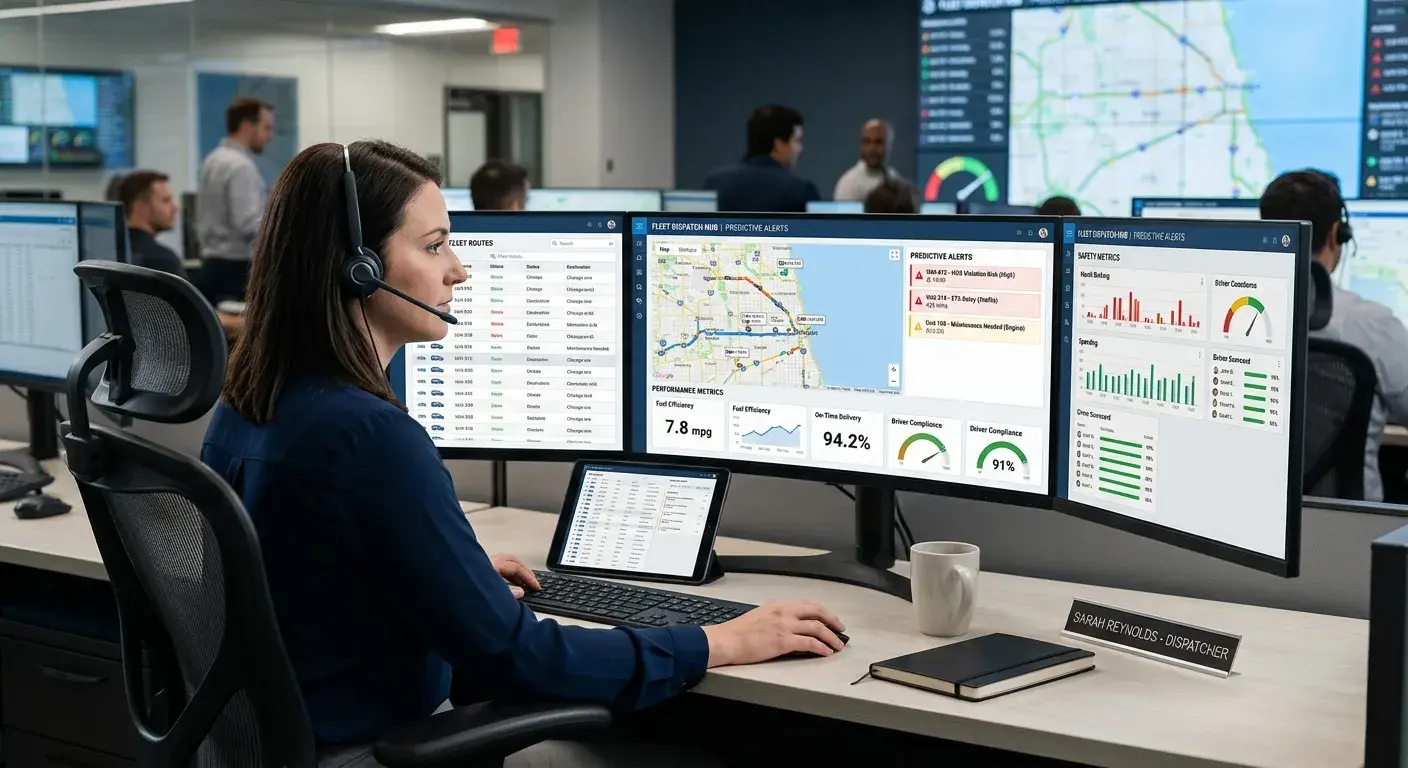
Telematics data that streams to a fleet management platform provides real-time insight into each electric school bus’s battery SoC, charging activity and status. Transportation teams use that information to monitor fleet conditions throughout the day and address potential issues before they affect service.
The CMS adds another layer of visibility. Using that solution, transportation teams monitor charger status and charging schedules for the electric vehicles in the fleet. Telematics tells you what's happening with the bus. CMS tells you what's happening with charging.
Why does inspection data matter during fleet electrification?
Because Clean School Bus Program recipients need to maintain records that demonstrate they purchased, deployed and operate the electric vehicles per program requirements. For program funding recipients, each electric vehicle’s inspection records are part of that documentation trail.
While paper inspection records are adequate, they’re also vulnerable to being delayed, incomplete or completely lost. Electronic inspection records are verifiable and easier to review.
Over time, digital inspection records create a searchable history of:
- Inspection activity
- Reported defects
- Repairs
When reviewed together, inspection records, telematics data and fleet records provide a complete view of how any fleet vehicle, including electric buses purchased with Clean School Bus Program funding, is performing over time.
How to measure your fleet’s Clean School Bus Program results
Integrated fleet management technology solutions document fleet performance throughout the electrification project’s life, from application to daily operations.
Our purpose-built student transportation solution, Zonar Bus Suite, combines routing, transportation management, fleet visibility, telematics and maintenance data to help districts manage conventional and electric school bus fleets side by side. Zonar fleet management platform and OEM-grade telematics enable transportation departments to capture and organize the operational data needed throughout that process.
|
Project phase
|
What fleet telematics data provides
|
|
Application
|
Data-based evidence to help identify logical vehicle replacement candidates
|
|
Funding justification
|
Documentation and data to support vehicle replacement decisions
|
|
Deployment readiness
|
Establishes baseline metrics measuring future performance
|
|
Program reporting
|
Documents vehicle utilization and operational performance throughout deployment
|
|
Demonstrating results
|
Proves pre- and post-deployment performance and costs
|
Vehicle data, inspection records and fleet performance integrated together make supporting the program’s requirements easier. For electric school bus fleets, integrated telematics and charge management tools provide insight into battery SoC, charging activity and vehicle readiness. Transportation teams know their fleet’s condition and availability before a single bus leaves the yard.
Electronic verified inspection reporting systems, like Zonar EVIR® extends that documentation trail, especially for fleets still using paper-based processes. EVIR digitizes the entire vehicle inspection process and enables teams to verify each inspection online. Inspection records are verifiable as complete and maintained online, which supports the program’s documentation requirements.
Together, Zonar integrated fleet technologies enable transportation departments to apply for, plan for and measure the long-term impact of their Clean School Bus Program investment.
Learn more about Zonar fleet solutions for electric school buses.
And contact us for more information.