Summary: A transportation maturity model helps school districts close operational gaps by advancing from reactive to proactive systems, improving efficiency, safety, and decision-making through better integration of data, processes, and technology.
Read time: 10-min read
Transporting students comes with high expectations for safety and reliability. Unfortunately, the resources available to meet those expectations are limited. Workforce shortages, increasing safety demands and rising costs continue to impact how school bus fleets operate. With approximately 480,000 school buses operating across the U.S., even small hiccups impact millions of families.
Many student transportation management systems and processes have evolved more slowly than the challenges today’s fleets face. There’s a gap between modern pressures and many student transportation fleets’ operational maturity to respond.
Which brings you here, where we’ll cover what a transportation maturity model looks like. And how it provides a framework for filling those gaps. This maturity model helps districts assess current capabilities, identify areas for improvement, and plan a path to a safer, more efficient, and more sustainable student transportation operation.
What is a student transportation maturity model?
A transportation maturity model is a structured, progressive framework of operational capability that evaluates how effectively a school district manages key aspects of school fleet management. Unlike a one-time performance metric, a maturity model evaluates how developed and aligned the operation is across its people, processes, systems and technology.
These include:
- Workforce stability
- Safety
- Technology
- Data
- Overall efficiency
The model outlines stages of development instead of measuring performance at a single point. Each stage represents a higher level of coordination, visibility and strategic alignment across student transportation management systems.
Mind the gap.
Let’s examine what a gap looks like. Student transportation teams operating using numerous systems, including fleet management software, routing platforms, ridership tracking technologies, inspection and compliance systems, and parent communications. And the team’s limited staff has difficulty analyzing and putting such a large volume of fleet data to use.
Too many systems, too much data, too few people to make the best use of it.
In fact, according to the 2026 Student Transportation Report survey, 48% of respondents say that limited staff is their primary data challenge. That’s a gap.
Adding more tools increases the burden on the staff instead of reducing it. What’s needed are systems that reduce manual effort and support the staff by producing actionable insights. And that’s a central principle of a mature operation.
Shift the conversation.
A maturity model is used for assessing the current operation, prioritizing investments based on those findings, and creating a roadmap to progress to the next stage.
The conversation shifts from What tools do we need to buy to What capabilities do we need to build?
The transportation maturity model isn’t new.
The U.S. Department of Transportation Federal Highway Administration (DOT) already uses these frameworks. Applying the same approach to student transportation only makes sense.
What are the five stages of a transportation maturity model?
Student transportation operations evolve through a maturity model across five distinct stages. The process starts with operating in a cycle of constantly reacting to daily challenges and eventually, through thoughtful planning and implementation, to one of anticipating challenges before they happen.
- Stage 1: Reactive
- Stage 2: Digitized
- Stage 3: Connected
- Stage 4: Optimized
- Stage 5: Proactive
Understanding your operation’s current stage helps you identify and prioritize improvements to build a roadmap for where you want your transportation system to evolve next.
Stage 1: Reactive
At this stage, transportation departments operate in a constant state of response to daily disruptions. A driver called in sick. Flooding closed a key road on a route. Weather delays mean late starts. And incoming parent calls for updates are tying up the phone lines as well as the staff who respond to those calls.
These departments don’t have as much time to plan ahead and optimize in many meaningful ways because they rely so heavily on manual processes, just getting through the day takes up most of their time.
- Small teams of limited staff often manage complex routing and dispatch workflows.
- Driver shortages force continuous adjustments to routes and schedules.
- Service reliability fluctuates, and communication with drivers and families becomes more difficult.
The gap: Too many people trying to manually update operations as daily disruptions continue. Relying on manual routing instead of modern school bus routing software increases inefficiencies and operational strain.
Stage 2: Digitized
This is when manual processes start being streamlined and modernized. Districts start adopting core fleet technologies such as school bus routing software, GPS vehicle tracking, and electronic inspection systems.
Many student transportation fleets have already done this, especially in terms of routing software.
The gap: Even though these systems, tools and processes are digitized at this stage, they often operate independently. Data silos exist across fragmented fleet platforms. And teams still rely on some manual processes to connect the information and make decisions.
Digitization means progress. But the remaining data fragmentation limits transportation teams’ ability to get the full operational value and ROI out of their fleet management software. Less actual paperwork, whiteboards and routing maps, but people still need to connect the dots.
Stage 3: Connected
Hello integration. This is the stage where student transportation fleet systems, software, tools and data start coming together. And that introduces broader visibility across the operation.
School districts deploy multiple systems to manage:
- School bus and vehicle routing
- Dispatch, driver and parent communication
- Vehicle tracking and diagnostic monitoring
- Student ridership tracking and safety
While one step closer to becoming a mature transportation model, integration at the connected stage remains a challenge.
The gap: Many districts at the connected stage use multiple tools for student transportation management, but they lack a unified fleet management platform to bring it all together.
Disconnected systems are still in place, and staff and decision makers still have limited access to real-time data. One step closer, but the systems, software and fleet tools are still not as effective as they could be if they were more closely integrated. Teams still spend more time navigating their fleet’s systems and data than improving efficiency or enhancing other outcomes.
Stage 4: Optimized
Fleet technology is now core to the operation’s overall strategy and ability to adapt to modern challenges. This is where districts integrate systems more closely and align operations around defined, measurable outcomes.
Now, the focus has shifted from digitizing manual processes to optimizing more aspects of the fleet’s operation using the data from the school bus fleet technology it’s implemented. Instead of spending most of their time reacting to daily disruption, teams proactively plan ahead and measure outcomes based on key performance indicators (KPIs) captured through the more fully integrated fleet management platform.
- On-time performance
- Safety violations
- Route productivity
- School bus utilization
- Stop optimization
- Safe driver performance
Integrated fleet management software and routing systems support more informed, more efficient planning, communication and performance tracking across the operation. Better able to analyze large amounts of fleet data, even small teams with limited staff are also better able to inform operational strategies.
Case in point: school bus driver hiring and retention. With easier, real-time access to how their fleet operates in the real world, student transportation fleets focus more on how to hire for long-term stability than short-term fixes.
Read also: Optimize every school bus fleet using GPS & vehicle data
Stage 5: Proactive
This is the highest level of the student transportation maturity model. Here, decision makers, managers and teams are able to focus on anticipating and addressing issues before they disrupt service instead of constantly reacting to daily disruptions.
Integrated student transportation management platforms provide real-time visibility into fleet performance, route performance, driver activity, and student ridership.
- Automate operations, workflows and record-keeping.
- Base decisions and strategies on actual data over planned assumptions.
- Focus on optimizing operations, ensuring safety and planning ahead.
Technology choices and strategies align closely with workforce support, community service needs, and operational efficiency. Tools that reduce workload, improve communication and streamline routing are prioritized. Finally, the district realizes the full value of its fleet technology investments.
At this stage, the school fleet management ecosystem functions as a seamless system. And data silos are eliminated.
What are the core pillars of a transportation maturity model?
Integrating technologies and systems.
As fleet technology adoption grows, data and insight fragmentation remain. A fully mature transportation model requires fully mature integration for greater visibility and efficiency. Without it, the people doing the work are still doing more work and manual tasks instead of focusing on higher priorities such as reliability, safety and cost control.
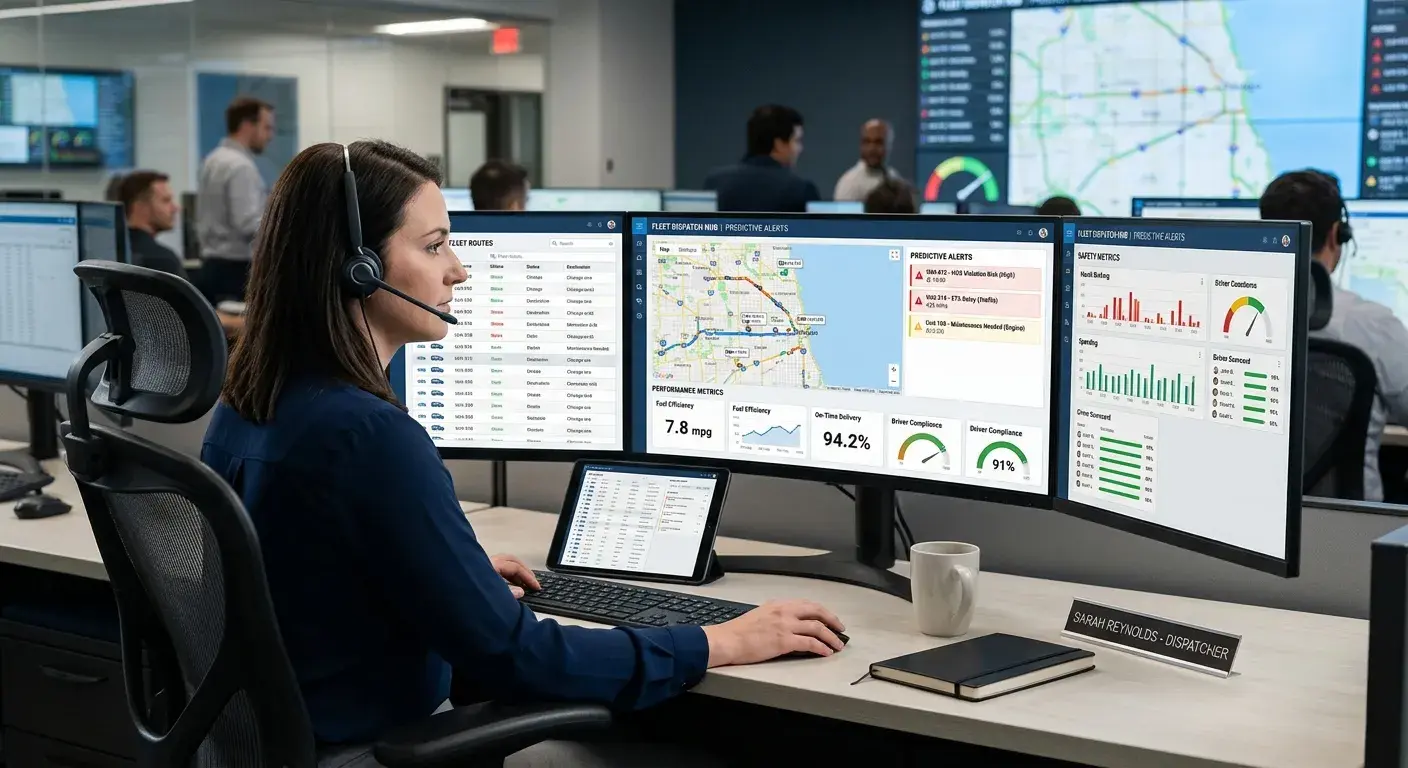
Integrated fleet management software platforms unify routing, safety, maintenance and communication data into a single operational view. Multiple systems coming together to create a seamless ecosystem that supports the people behind safe, reliable student transportation instead of making them work harder to accomplish what could otherwise be automated.
Operating efficiently.
Efficiency depends on reducing manual work and improving process consistency. Digitizing and integrating multiple student transportation fleet management workflows and systems automatically reduces the time and effort required for staff to run the fleet.
Modern school bus routing software and automation tools further help teams streamline route planning, dispatch and communication with families. Plus, the fleet management software, telematics and diagnostics open more pathways to finding additional operational optimizations because transportation leaders and teams find trends that would have otherwise remain buried in data silos.
Reducing manual intervention allows staff at all levels of the organization to focus on higher-value decisions and turning fleet data into actual action.
Nearly half of transportation professionals identify limited staff capacity as their primary data challenge. But integrated student transportation management systems provide dashboards, alerts and reporting that support timely decision-making.
Achieving school bus driver workforce stability.
Driver shortages remain a top priority for 75% of these student transportation leaders. Mature organizations focus on retention, training and driver support over short-term hiring to fill seats. These fleets attract and retain higher-quality candidates who want to work for the better fleets.
- Better visibility into their actual fleet needs to reduce overwork
- Tools and systems that improve student safety and reduce driver liability
- Data-backed approach to assessing driver performance
- Ability to thoughtfully create career paths for their drivers
Mature organizations are much better positioned to reduce turnover and improve on-time performance.
Read also: The Driver Shortage Playbook: How student transportation fleets are hiring, retaining and adapting
Opening communication for greater safety.
Safe fleets require more than safe drivers. They also need open communication, compliance and accountability, which require integrated, all-in-one student transportation technologies.
Parents are in the loop. Children are accounted for. Drivers get the updated route info they need. And teams coach more productively and helpfully instead of punitively.
What are common barriers to advancement?
Changing a student transportation fleet’s operating model to one of maturity doesn’t happen overnight. Managing daily operations is challenging enough. Teams in Stage 1 are, by definition, under too much strain and time constraints to effectively jump to a full maturity model.
- Budget constraints that limit investment in new systems
- Rising operational costs that add pressure on resources
- Limited staffing, which reduces capacity to manage data and workflows
- Disconnected systems, which create inefficiencies and data silos
These ongoing challenges only reinforce the need for fleet management software, systems and tools that simplify operations instead of adding complexity.
What role does technology play in advancing a fleet’s maturity?
Student transportation technology is critical. Without it, there’s no digitization, integration or optimization, all of which are needed for a full maturity model.
But a strategic approach is required. Adding tech for the sake of solving a single problem opens the door for more complexity. Adding tech to contribute to a greater fleet management ecosystem that supports objectives and streamlines operations? That’s the better way forward to an effective transportation maturity model.
Priorities around school fleet management have shifted. School districts realize how important it is to invest in tech that supports accountability and visibility.
“On average, fleets reported plans to evaluate 2.7 additional systems in the coming year, demonstrating the necessity for technology to automate currently high-volume activities.”
- 2026 State of Student Transportation
Modern fleet management supports modern transportation maturity models.
Mature school fleet management operations deliver consistent, reliable and safe transportation services. But the transportation maturity model requires more than a single fleet management platform. Teams need integration of several solutions, all of which work together to support the people who actually do the work.
Zonar fleet management technologies enable transportation teams to unify their operations through integrated fleet management software, advanced school bus routing, driver coaching systems, and student ridership visibility.
- School bus routing software for improving route efficiency
- Digitization and automations that reduce manual workloads
- Driver performance, navigation and safety tech that supports safety and reliability
- Communication and route tracking apps for families to stay up to date
- Student ridership tracking that informs planned routes and supports emergency situations
- Real-time visibility and actionable insights, with faster data analysis, for greater focus on bigger priorities
The most effective districts align their people, processes and technology into a cohesive system, which enables teams to operate more effectively despite staffing and budget constraints.
Plus, they enable transparency into the student transportation operations so that, come budget and planning time, transportation leaders make a stronger case for the funding needed to grow and optimize other aspects of the organization. They have the data in hand to demonstrate their accountability and make a stronger case for what they need to better serve their communities.
Advancing student transportation maturity requires a long-term commitment. With the right systems in place, districts build operations that are efficient, resilient and prepared for future challenges.
Contact us | Get pricing