Summary: A school bus pre-trip checklist helps drivers identify safety issues before students board. This guide covers in-cab checks, lighting, emergency equipment, steering, tires, engine and more, highlighting how digital workflows enhance accountability, maintenance and compliance.
Read time: 27-min
Every school bus route begins with a responsibility most students and parents never see. It begins with a school bus pre-trip inspection checklist.
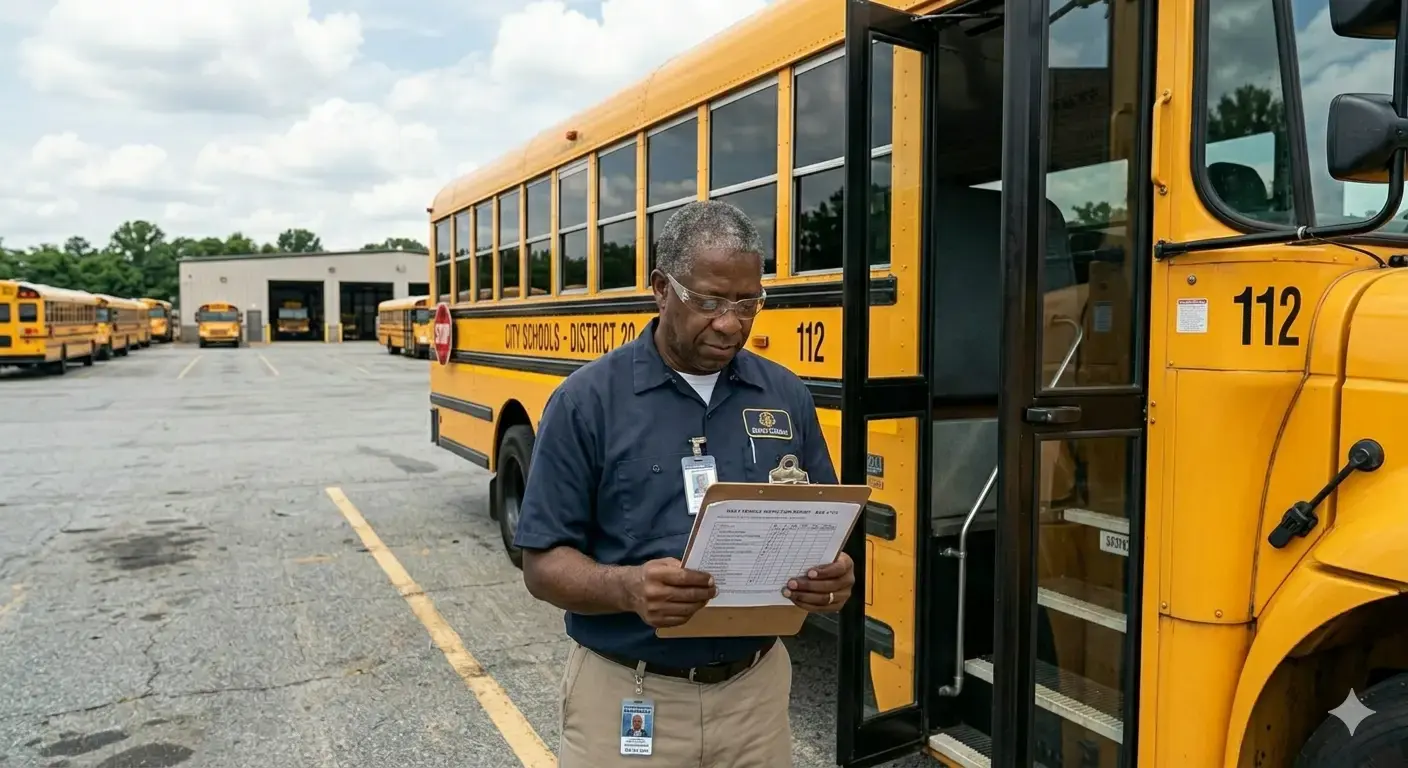
Before students board the bus, drivers check brakes, tires, warning lights, steering systems and emergency equipment for problems that could put children at risk once the vehicle is on the road.
Pre-trip inspections also carry a compliance obligation. FMCSA guidelines for school bus operators outline the federal safety requirements for commercial school bus operations, including vehicle inspection and maintenance standards. Consistent daily inspections help transportation departments keep vehicles aligned with those requirements and catch problems before they become compliance issues.
The larger goal, though, is safety. A missed fluid leak or failing brake component puts students at risk the moment the vehicle enters the road.
That is why pre-trip inspections matter. They help drivers catch defects before the first stop of the day, reduce preventable breakdowns and support safer transportation for students, drivers and surrounding traffic.
And they work. According to the California Department of Education students are nearly 8x safer riding a school bus than traveling in a car. The fatality rate for school buses is 0.2 deaths per 100 million vehicle miles traveled, compared to 1.5 for passenger cars.
This guide covers a complete school bus pre-trip inspection checklist, including:
-
In-cab systems
-
Passenger safety equipment
-
Exterior lighting
-
Steering and suspension components
-
Engine compartment inspections
It also explores how digital inspections workflows help school districts replace paper forms with time-stamped records, faster defect recording and better visibility into fleet safety issues.
In-cab inspection and vehicle start checks
Before pulling away from the curb or beginning a route, complete a thorough in-cab inspection. These checks confirm that critical braking systems, visibility equipment, warning indicators and emergency tools are functioning properly before the school bus enters service.
This phase of the pre-trip inspection focuses on the systems drivers interact with while operating the vehicle, especially those tied to braking performance, visibility and emergency readiness.
1. Air brake
The air brake system is one of the most important safety systems on a school bus. Before driving, verify that air pressure builds correctly, warning systems activate properly and the emergency brakes engage within the expected PSI range.
Part 1: Verify air gauge pressure
-
Start the engine and monitor the air gauge.
-
Verify that the air pressure builds to approximately 120-140 PSI.
-
Identify when the system reaches cut-off pressure.
Proper air pressure is essential for safe braking performance. Low pressure or failure to reach cut-off pressure may indicate leaks or air system issues that could compromise braking capability.
Part 2: Check for air-leaks
-
Turn the engine off.
-
Leave the key in the "on" position.
-
Release the parking brakes.
-
Apply and hold the foot brake.
-
Allow the air gauge to stabilize.
-
Roll the driver window down.
-
Hold the brake pedal for one full minute while listening carefully for air leaks.
Listen for:
Address any unusual air loss before operating the vehicle.
Part 3: Test the low air warning device
-
Keep the engine off with the key in the "on" position.
-
Apply and release the foot brake repeatedly to lower the air pressure.
-
Verify that the low-air warning device activates at 55 PSI or higher.
-
Observe the PSI reading when the warning activates.
The low air warning system alerts the driver before brake pressure reaches unsafe levels. A malfunctioning warning device prevents drivers from recognizing a dangerous loss of braking capability.
Part 4: Test emergency brake activation
-
Continue reducing air pressure by applying and releasing the foot brake.
-
Verify that the parking brakes automatically activate between 20 and 45 PSI.
-
Observe the PSI reading when the parking brakes "pop out" or engage.
This test verifies that the emergency brake system will engage automatically if the air pressure drops too low during operation.
Why is testing air brakes important
The air brake system is one of the most important safety systems on a school bus. Brake defects are among the most common reasons commercial vehicles are placed out of service during roadside inspections. The North American Standard Out-of-Service Criteria define the specific brake conditions that prohibit a vehicle from operating until repaired.
Verifying air pressure, checking for leaks and testing emergency brake activation before every route keeps buses compliant and students protected.
2. Parking brake
-
Activate the parking brake.
-
Shift the vehicle into forward gear.
-
Gently tug forward to confirm the parking brake is holding properly.
A properly functioning parking brake helps prevent unintended vehicle movement during loading, unloading and parking operations.
3. Service brake
-
Place the vehicle in forward gear.
-
Accelerate slowly to approximately 5 MPH.
-
Apply the foot brake firmly.
-
Verify that the brake pedal responds properly.
-
Check that the steering wheel does not pull left or right during braking.
This test helps identify:
4. Lightning indicators
Dashboard indicators help confirm that major lighting and safety systems are operating correctly before the route begins.
Before engine start
Verify that the following indicators illuminate and cycle properly:
After engine start
Check operation of:
-
Left turn signal
-
Right turn signal
-
Four-way flashers
-
High beam indicator
Lighting indicators help drivers identify system malfunctions before operating the vehicle in traffic or low-visibility conditions.
5. Safety and emergency equipment
School buses must carry the required emergency equipment that is accessible and ready for use.
Fire extinguisher
-
Properly mounted
-
Fully charged
Emergency warning triangles
Spare fuses or breakers
Verify that spare fuses or breakers are available if the vehicle is equipped with them.
Emergency equipment helps drivers respond quickly to roadside breakdowns, emergencies, or hazardous situations.
6. Windshield
A clear windshield is critical for visibility and safe student transportation.
Obstructed or damaged windshields reduce visibility and increase the risk of accidents.
7. Monitoring devices
Verify that all visibility and monitoring equipment is clean, adjusted and functioning properly.
Mirrors
Cameras (if equipped)
Properly adjusted mirrors and cameras improve driver awareness around the vehicle, especially during student loading and unloading.
8. Wipers and washer system
Wiper arms
-
Securely mounted
-
Not bent or damaged
Wiper blades
-
Not split or torn
-
Securely attached
Washer fluid
Confirm that washer fluid sprays properly onto the windshield.
Operational check
Activate the wipers and washer system to confirm proper operation.
Damaged or ineffective wipers can severely reduce visibility in poor weather.
9. Heater and defroster
-
Turn on the heater.
-
Turn on the defroster.
-
Verify that both systems are operating properly.
Defrosters help maintain windshield visibility, while heaters support driver and passenger comfort during cold-weather operation.
10. Horn / Electric horn
The horn is an important warning device that alerts pedestrians, motorists and others around the vehicle.
Passenger and school bus safety inspection checks
After completing the in-cab inspection, verify the condition and operation of passenger safety systems throughout the bus. These checks focus on student loading and unloading safety, emergency evacuation readiness, passenger visibility systems and interior safety equipment.
1. Lighting indicators
School bus lighting systems help communicate vehicle movement and student loading activity to surrounding traffic. Verify that all warning indicators activate and function properly before entering service.
Strobe light indicator
Flashing amber warning indicator
-
Illuminates properly
-
Flashes correctly
-
Free of damage
Flashing red warning indicator
-
Illuminates properly
-
Flashes correctly
-
Free of damage
These lighting systems alert surrounding motorists during student loading and unloading operations. Malfunctioning warning indicators create dangerous traffic situations around the bus.
2. Safety and emergency equipment
Ensure emergency response equipment is always present, sealed and ready for use.
First aid kit
Body fluid cleanup kit
School buses must be prepared to respond quickly to medical incidents, injuries, or sanitation hazards during transport operations.
3. Passenger entry
The passenger entry area experiences constant daily use. Inspect them carefully for safe operation and accessibility.
Passenger entry door
Passenger handrails
-
Securely mounted
-
Not bent or damaged
Passenger step light
-
Working properly
-
Clean
-
Free of cracks or damage
Passenger entry steps
4. Emergency exits
Keep all emergency exits clearly labeled, easy to operate and capable of closing securely after inspection.
Emergency window exits
Roof or ceiling exits
-
Properly labeled
-
Operates smoothly
-
Closes securely
Rear emergency exit door
Emergency exits provide critical evacuation routes during accidents, fires and other emergencies. Ensure every exit remains fully operational before transporting students.
5. Seats
To help protect student safety, keep passenger seating secure and free from damage.
Seat frames
Seat cushions
Loose or damaged seating increases the risk of injury during sudden stops or collisions.
6. Student warning and strobe lights
When inspecting exterior student systems, safely exit the bus while:
These warning systems play a major role in protecting students during loading and unloading operations.
Strobe light
Lenses
-
Clean
-
Free of cracks or damage
-
Not missing
Operation
Front and rear amber student warning lights
Lenses
-
Clean
-
Free of cracks or damage
-
Not missing
-
Proper amber color
Operation
Front and rear red student warning lights
Lenses
-
Clean
-
Free of cracks or damage
-
Not missing
-
Proper red color
Operation
Student warning lights control traffic around the loading and unloading areas. Proper operation is essential for student visibility and roadway safety.
7. Traffic stop arms
The stop arm system warns surrounding motorists when students are entering or exiting the bus.
Stop arm
Stop arm lenses
-
Clean
-
Free of cracks or damage
-
Not missing
-
Proper red color
Stop arm lights
Traffic stop arms are one of the most visible student safety systems on a school bus. Damage or malfunction reduces visibility and increases risk around loading zones.
8. Student safety crossing arm
The crossing arm helps guide students safely across the roadway and away from the danger zone in front of the bus.
Crossing arms help improve student visibility and encourage safer crossing distances in front of the vehicle.
Why are passenger and school bus safety inspections important?
Perform this inspection to confirm that student safety systems work properly before the bus enters service.
-
Entry systems – Doors, steps and handrails help students board and exit safely.
-
Emergency exits – Window, roof and rear emergency exits must remain accessible and functional so passengers can evacuate quickly during an emergency.
-
Passenger seating – Seats and seat frames help protect students during sudden stops or collisions.
-
Warning and crossing systems – Warning lights, stop arms and crossing arms alert surrounding drivers when students are loading, unloading, or crossing the street.
A malfunctioning warning light, damaged stop arm or blocked emergency exit can increase the risk of injury during normal operation or an emergency.
Because school buses transport children, drivers should inspect these systems carefully before every route.
Exterior lights operation check
Before beginning a route, verify that all exterior lighting systems are functioning properly. This includes lights on the front, sides and rear of the school bus.
Exterior lighting plays a critical role in:
Even a single malfunctioning light reduces visibility or creates confusion for surrounding motorists.
1. Headlights and left turn signal
Turn on the headlights and activate the left turn signal. Walk around the vehicle and verify:
-
Headlights function properly
-
Left turn signal functions from the front, driver's side and rear
-
Front and driver-side clearance lights function properly
Headlights and turn signals help other motorists understand the vehicle’s position and intended movement, especially on early-morning or low-visibility routes.
2. High beams and right turn signal
Activate the high beams and the right turn signal. Walk around the vehicle and verify:
-
High beams function properly
-
Right turn signal function from the front, passenger side and rear
-
Passenger-side clearance light functions properly
High beams improve visibility in dark driving conditions, while properly functioning turn signals help surrounding traffic anticipate vehicle movement safely.
3. Four-way flasher
Activate the four-way flashers and verify operation from the:
-
Front
-
Rear
-
Driver's side
-
Passenger side
Four-way flashers help alert nearby motorists during roadside stops, breakdowns, emergency situations, or loading procedures.
4. Brake light
Apply the service brake and verify proper brake light operation at the rear of the school bus.
Brake lights signal to vehicles behind the bus that the bus is slowing and help reduce the risk of rear-end collisions.
Additional exterior lighting inspection tips
During the walkabout inspection, look for:
Why consistent lighting inspections matter
Exterior lighting systems are some of the most visible and frequently used safety components on a school bus. Routine inspections improve roadway visibility, support student safety procedures and reduce the risk of preventable accidents.
Front of the vehicle and engine compartment checks
The front inspection area and engine compartment contain several of the school bus’s most critical operating systems. Carefully inspect these components before every route to identify leaks, steering issues, damaged parts, or fluid problems that could affect vehicle safety or reliability.
This phase of the pre-trip inspection focuses on:
1. Front of the vehicle
Before opening the engine compartment, inspect the visible components at the front of the bus.
Front lenses and lights
-
Clean
-
Free of cracks or damage
-
Proper amber color
-
Not missing
Clean, undamaged front lighting improves visibility and helps surrounding motorists clearly identify during low-light or adverse weather conditions.
Underneath the vehicle
Look under the front of the bus for:
-
Oil puddles
-
Coolant leaks
-
Fuel leaks
-
Other fluid accumulation
Fluid leaks indicate developing mechanical issues that may lead to breakdowns, overheating, steering problems, or brake system failures.
2. Engine compartment
The engine compartment inspection helps verify that critical systems are properly maintained and free from leaks or visible damage.
Engine oil level
-
Remove the oil dipstick.
-
Verify that the oil level falls between the "add" and "full" marks.
Low engine oil levels increase engine wear, overheating risk and long-term mechanical damage.
Coolant level
-
Check the coolant reservoir.
-
Verify that coolant levels are between the "add" and "full" marks.
Proper coolant levels help regulate engine temperature and reduce the risk of overheating during operation.
Power steering fluid
-
Inspect the power steering fluid reservoir.
-
Verify that the fluid level falls within the recommended range.
Low power steering fluid can affect steering responsiveness and vehicle handling.
Fluid leaks
Check for:
-
Excessive fluid leaks beneath the vehicle
-
Leaks on either side of the engine compartment
-
Wet or contaminated components
-
Visible dripping from hoses or fittings
Early leak detection helps prevent larger mechanical failures and reduces the risk of roadside breakdowns.
Compressed air lines and hoses
Check on both sides of the engine for:
-
Leaks
-
Loose fittings
-
Cracks
-
Cuts
-
Damaged connections
Damaged air lines reduce brake system pressure and compromise safe vehicle operation.
3. Steering system components
The steering system should be carefully inspected for leaks, loose components, or visible damage that could affect the vehicle's directional control.
Power steering box
-
Securely mounted
-
Free of leaks
Power steering hoses
Steering linkage
The steering linkage transfers steering input to the wheels. Damaged components affect vehicle control.
Castle nuts and cotter keys
Steering linkage sockets
-
No excessive wear
-
No looseness
-
No abnormal movement
Worn steering linkage components reduce steering stability and increase safety risks.
Why engine compartment inspections matter
Many serious mechanical issues begin as small leaks, loose fittings or gradual fluid loss. Regular engine compartment inspections help drivers identify problems early, reduce unexpected downtime and improve overall vehicle safety before students are on board.
Steering axle inspection
The steering axle supports several of the school bus’s core safety systems, including steering, suspension, braking and tire performance. Steering axle components help maintain vehicle stability, steering control, braking performance and tire condition. These parts absorb constant road stress and vehicle weight during daily operation.
Check for:
1. Front axle
The front suspension system helps stabilize the vehicle, absorb road impact and maintain proper ride height and steering control.
Spring mounts
-
Securely mounted
-
Free of cracks or damage
Leaf springs
-
Properly aligned
-
Free of cracks
-
Not missing components
Shock absorbers
-
Securely mounted
-
Free of bends or damage
-
Free of fluid leaks
Suspension air bags (if equipped)
Damaged suspension components reduce ride stability, steering control and vehicle handling.
Vehicle leveling
Verify that the vehicle sits level:
-
Side to side
-
Front to back
An uneven vehicle stance indicates suspension problems, low air pressure, or damaged components.
2. Front axle air brake
Air brake components near the steering axle should be inspected for leaks, damage and contamination.
Compressed air hoses
Brake drums and lining
-
No grease contamination
-
No oil contamination
-
Visible damage
Damaged or contaminated air brake components reduce braking performance and increase stopping distance.
3. Front wheel
Front wheel inspections help identify tire wear, wheel damage, or loose hardware that could affect steering, braking, or vehicle safety.
Tires
-
Tread depth at least 4/32’’
-
Even tread wear
-
Sidewalks free of cuts and bulges
-
Valve stems accessible and capped
-
Tire pressure within the recommended range
Use a tire pressure and tread depth gauge during inspection.
Proper tire condition improves traction, steering response, braking performance and overall vehicle stability.
Rims
Damaged rims affect wheel balance, tire sealing and safe vehicle operation.
Lug nuts
No missing lug nuts
No broken wheel studs
No rust trails or shiny threads indicating looseness
Loose or damaged lug nuts lead to wheel instability or wheel separation.
Why steering axle inspections matter
Consistent steering axle inspections help identify wear and mechanical issues before they become larger safety or maintenance problems. Because steering axle components operate under constant stress, they should be inspected carefully before every route to help maintain safe handling, braking performance and tire condition.
Side-of-vehicle inspection
The side-of-vehicle inspection helps drivers identify damage, leaks, loose parts and visibility issues that are not visible from the front or rear of the bus. It covers critical components along both sides of the vehicle that are exposed to weather, road debris and daily wear.
-
Side lighting and reflectors
-
Mirrors and monitoring systems
-
Battery and fuel system components
-
Structural frame condition
1. Side of vehicle
Side lenses
Side marker lights improve vehicle visibility during early morning, evening and low-visibility driving conditions.
Reflectors
Reflectors help improve visibility from the side of the bus and make the vehicle easier for surrounding traffic to identify at night or during poor weather.
2. Monitoring devices
Visibility systems on vehicle sides help drivers see blind spots, traffic and loading zones.
Mirrors
Mirror brackets
Mirror glass
-
Clean
-
Properly adjusted
-
Free of cracks or damage
Cameras (if equipped)
Camera systems improve visibility around the vehicle and support safer maneuvering in tight or crowded areas.
3. Battery system
Batteries and cables
-
Batteries securely mounted
-
Cable connections secure
-
No excessive corrosion on terminals
-
No loose or damaged wiring
4. Fuel tank
Fuel tank
DEF tank
5. Frame
Longitudinal frame rails
Cross members
Floor condition
Why is the side-of-vehicle inspection important
A side-of-vehicle inspection helps catch safety and maintenance problems before the bus begins its route. Because these components are constantly exposed and under stress, both sides of the bus should be checked before every trip.
Rear-of-vehicle inspection
The rear-of-vehicle inspection focuses on the lighting and visibility systems that signal braking, vehicle position and presence to surrounding traffic. This area includes components directly exposed to weather, moisture and road debris during daily operation.
1. Rear lenses
2. Rear reflectors
Additional rear inspection tips
During the rear walkabout inspection, look for:
-
Loose or hanging components
-
Body damage
-
Fluid leak beneath the vehicle
-
Missing hardware
-
Signs of impact damage near the bumper or rear body panels
Why is the rear-of-vehicle inspection important
A rear-of-vehicle inspection helps drivers identify damaged or malfunctioning components before the bus begins its route. Because rear lighting and visibility systems play a direct role in traffic awareness and safe stopping, they should be checked before every trip.
The shift toward digital pre-trip school bus inspections
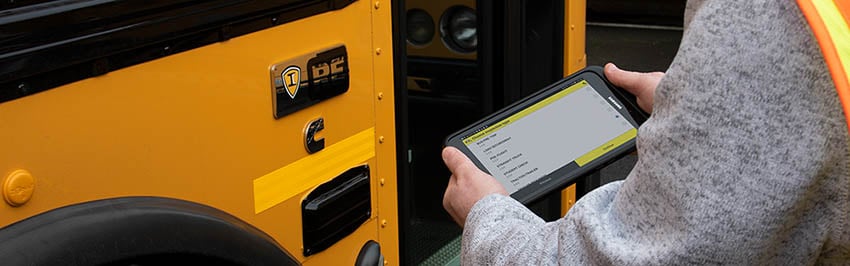
For decades, paper pre-trip inspections continued out of habit because there were no better options. However, they don’t work particularly well.
A clipboard can confirm a form was submitted. It cannot confirm:
-
Whether the inspection actually happened
-
When it was completed
-
Whether defects were reported immediately
-
Whether anyone reviewed the issue before the bus left the lot
As fleets grow and safety expectations increase, the gaps become harder to ignore. Paper-based inspections often lead to:
-
Lost or delayed forms
-
Inconsistent inspections
-
Slow communication between drivers, supervisors and maintenance teams
-
Limited visibility into recurring vehicle issues
-
Chasing paperwork instead of solving problems
What changes with digital inspections
Digital inspections reduce delays between reporting and action. Problems become visible sooner. Digital pre-trip inspections make inspection data immediately accessible to the entire transportation team. Instead of paperwork moving from driver to office to maintenance later, issues are shared instantly.
With digital inspections:
-
Drivers submit inspections electronically
-
Supervisors verify completion in real time
-
Maintenance teams see defects immediately
-
Safety issues are reviewed before a bus enters service
If a driver reports brake issues, damaged lights, fluid leaks, or missing safety equipment, the system flags the defect and notifies personnel.
That means faster response times, clearer accountability and fewer unsafe vehicles staying in rotation because a form sat unread.
If a defect is serious enough to prevent safe operation, supervisors and maintenance personnel can respond before the bus leaves the lot. Faster visibility helps transportation departments make repair, replacement, or dispatch decisions more quickly, reducing the risk of route delays, unexpected breakdowns, or last-minute vehicle changes that disrupt service.
Standardized workflows, consistent inspections
Unlike paper forms, which vary by driver and location, digital systems guide drivers through each required step in a structured workflow, automatically recording results and ensuring every inspection meets the same standard:
-
Completion times
-
Vehicle information
-
Reported defects
-
Verification data
Records are stored centrally rather than scattered across folders and filing cabinets. Some districts also use RFID or NFC scanning to verify that inspection points were physically checked, not just marked complete from the driver's seat.
Over time, digitally documented inspections can also help strengthen daily accountability across the transportation department. Because inspections are time-stamped, standardized and visible to supervisors in real time, drivers, dispatchers and maintenance personnel operate with clearer expectations and more consistent follow-through across the fleet.
Better fleet oversight
Digital inspection records help transportation departments:
-
Catch recurring issues earlier
-
Track fleet maintenance trends
-
Monitor inspection completion
-
Maintain clean compliance records
-
Prevent breakdowns, missed routes and safety failures
As fleets grow, manually managing inspection records becomes increasingly difficult. Transportation departments may need to track thousands of inspections, defect reports and maintenance follow-ups across multiple vehicles, drivers and locations.
Centralized digital records make it easier to retrieve inspection history, identify recurring fleet-wide issues, and maintain organized documentation for compliance reviews, audits and long-term maintenance planning.
Time-stamped digital inspection records can help districts demonstrate that required safety checks were completed before a vehicle entered service. In the event of an accident, roadside incident, or compliance investigation, centralized documentation may help transportation departments quickly retrieve records and verify inspection activity.
Supporting drivers through the transition from paper to digital
For many drivers, moving from paper inspection forms to digital workflows is a major change in routine. Adoption works best when the new process feels simpler and more reliable.
Digital inspection systems guide drivers step by step through required inspection points. Instead of relying on memory or handwritten notes, drivers follow a structured process that makes inspections easier to document and easier to complete consistently.
Clear prompts, mobile interfaces and real-time reporting also reduce paperwork. Drivers no longer need to manage paper forms, return documents by hand, or wonder whether defect reports reached supervisors or maintenance teams.
For transportation departments, standardized digital workflows can also simplify training and onboarding. New drivers learn the same inspection process used across the fleet, which improves communications between drivers, dispatchers and maintenance staff over time.
A more connected approach to school bus inspections
Every pre-trip inspection ensures that students travel in vehicles that are safely inspected. As transportation grows more complex, many districts adopt digital workflows to boost consistency, visibility and accountability.
Systems like Zonar EVIR® let transportation teams electronically document inspections, create timestamped records and quickly identify defects for faster repairs. Some fleets use digital verification to confirm inspection points during walkarounds. This connected process reduces paperwork, improves maintenance visibility and supports safer operations.
Some transportation departments also combine digital inspections with telematics and onboard engine diagnostic data to further improve fleet visibility. While visual walkarounds remain essential, connected vehicle systems can help identify active fault codes, battery issues or engine-related problems that may not be immediately visible during a manual inspection alone.
For Dee Bus Service, a contracted fleet running 238 school buses across 57 districts, switching from paper to EVIR cut repair time from 2 weeks to 24-48 hours and eliminated $7,000 in annual inspection book costs.
If your district is exploring ways to modernize inspection workflows, improve maintenance visibility or move beyond paper-based processes, talk to the Zonar team to learn more about EVIR and digitally verified inspections.