Fleet management continues to change as operators look for better ways to improve visibility, reduce downtime, manage costs, support drivers, and meet customer expectations. Technology is a major part of that shift, but the best results come from choosing tools that solve real operational problems.
As fleets evaluate priorities for the year ahead, several trends stand out across telematics, maintenance, safety, fuel management, electrification, automation, sustainability, and data security.
1. AI-Assisted Fleet Insights
Artificial intelligence is becoming more common in fleet management, especially in tools that help organize large amounts of vehicle, driver, asset, and operational data. Instead of replacing fleet managers, AI-assisted analytics can help surface patterns that may be hard to spot manually.
For example, AI-supported systems may help identify maintenance trends, route inefficiencies, driver behavior patterns, or unusual vehicle activity. These insights can help managers prioritize follow-up, reduce manual review, and make more informed decisions.
What fleet teams should evaluate
Before adopting AI-enabled tools, fleet teams should review what data the system uses, how recommendations are generated, how alerts are prioritized, and whether the tool supports the team’s actual workflows.
2. Predictive Maintenance
Preventive maintenance remains essential, but more fleets are also exploring predictive maintenance tools. These systems use vehicle data, diagnostic information, sensors, mileage, engine hours, and historical maintenance patterns to help identify possible issues earlier.
Predictive maintenance does not eliminate the need for inspections, technician review, or manufacturer guidance. However, it can help fleet teams plan service more proactively, reduce surprise downtime, and better understand which vehicles may need attention.
3. Telematics Beyond Basic Tracking
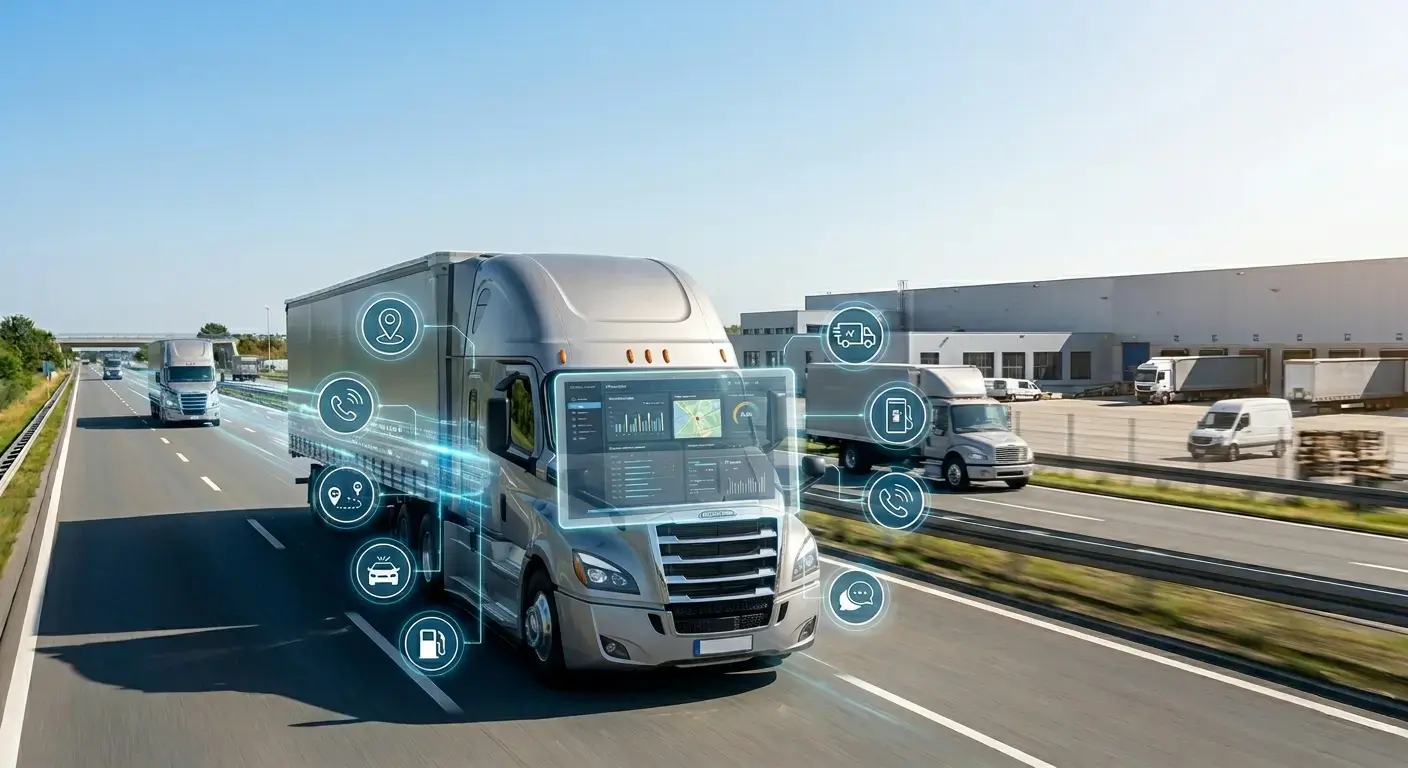
Telematics has moved far beyond simple dots on a map. Modern systems can provide visibility into vehicle location, driver behavior, engine data, fuel use, utilization, maintenance needs, and operational trends.
For fleet managers, this means telematics can support dispatching, safety programs, maintenance planning, compliance workflows, customer communication, and cost control. The most valuable systems are the ones that turn fleet data into reports and alerts teams can actually use.
4. Continuous Visibility and Real-Time Alerts
Real-time and near-real-time fleet visibility can help teams respond more quickly when something changes during the day. Location tracking, geofencing, route alerts, driver behavior alerts, and asset updates can all help managers identify exceptions and take action.
This visibility can support route planning, customer updates, service verification, asset protection, and driver coaching. The key is to configure alerts carefully so teams see important issues without being overwhelmed by noise.
5. Automation and Driver Assistance
Fully autonomous fleets are not the everyday reality for most operators, but automation and driver-assistance features continue to expand. Technologies such as lane support, adaptive cruise control, collision warnings, and other advanced driver assistance systems can help support safer driving when used appropriately.
Fleet teams should evaluate how these features fit with driver training, safety policies, vehicle selection, maintenance, and insurance requirements. Automation can support drivers, but it does not remove the need for clear expectations and responsible operation.
6. Smarter Fuel Management
Fuel remains one of the largest operating costs for many fleets. Smarter fuel management focuses on identifying the behaviors and conditions that increase fuel use, such as excessive idling, inefficient routes, speeding, rapid acceleration, and poor vehicle maintenance.
Fleet reports can help managers find patterns, coach drivers, review routes, and set realistic fuel-use goals. Actual savings vary by fleet, but better visibility can help teams reduce avoidable waste and improve operating discipline.
7. Fleet Electrification and Alternative Fuels
Electrification continues to be an important fleet management trend, but adoption depends heavily on vehicle type, route structure, charging access, payload needs, duty cycle, cost, and available incentives.
For many fleets, the best starting point is a fleet assessment. Teams can review routes, average trip distances, dwell time, charging infrastructure, vehicle replacement cycles, and total cost of ownership. Some organizations may start with a small pilot before scaling electric or hybrid vehicles across more of the fleet.
8. Sustainability Across Fleet Operations
Sustainability in fleet management goes beyond electric vehicles. It can include reducing idle time, improving maintenance, optimizing routes, extending asset life, choosing efficient equipment, reducing unnecessary miles, and using lower-maintenance tracking tools where appropriate.
Fleet teams should connect sustainability goals to measurable operational actions. That makes it easier to track progress and balance environmental goals with service requirements, budget constraints, and vehicle availability.
9. Cybersecurity and Fleet Data Protection
As fleet systems become more connected, cybersecurity becomes more important. Fleet platforms may include vehicle data, driver information, routes, customer details, maintenance records, and operational reports.
Fleet teams should evaluate how vendors protect data, manage user access, support integrations, and handle security updates. Strong internal policies also matter, including role-based permissions, password practices, device management, and regular review of connected systems.
10. More Reliable Operational Records
Fleets increasingly depend on accurate, accessible records for maintenance, compliance, asset history, fuel reporting, inspections, and customer service. Some industries are exploring blockchain and other tamper-resistant recordkeeping approaches, but most fleets should start with the fundamentals: clean data, consistent processes, and systems that make records easy to review.
The goal is to create trustworthy operational records that help teams understand what happened, when it happened, and what action was taken.
How to Evaluate Fleet Management Trends
Not every trend will be equally relevant to every fleet. A small service fleet, a long-haul carrier, a public sector fleet, and a construction fleet may all need different tools and workflows.
Before investing in new technology, fleet teams should define the problem they are trying to solve, document requirements, review internal processes, and consider how the tool will be implemented. The best fleet technology supports real decisions and fits into daily operations.
How Zonar Can Help
Zonar helps fleet teams bring vehicle, driver, asset, and operational data into clearer view. With fleet management, telematics, maintenance, safety, compliance, and video solutions, Zonar can help organizations make more informed decisions across daily operations.
To learn how Zonar can support your fleet management goals, contact the Zonar team.