Summary: Fleet technology adoption continues to grow across transportation, logistics, utilities and government fleets. Learn what's driving investment and how connected technologies help organizations improve visibility, efficiency, safety and operational performance.
Read time: 11-min read
Industry forecasts show that the fleet telematics market is expected to grow significantly, from about $10.42 billion in 2025 to roughly $21.95 billion by 2032. This continued growth of fleet technology adoption shows fleets need better visibility into their operations and more effective ways to improve performance.
And fleet solution providers are a key piece of the puzzle in how that investment reaches the organizations that need it.
Modern fleets operate differently.
For a long time, fleet management was largely an exercise in reconstruction. Vehicles went out, work got done and managers pieced together the story afterward through paperwork, driver updates and maintenance records.
That model worked reasonably well when fleets were smaller and operations were simpler. Today's fleets face a different reality: more vehicles, more regulations, higher customer expectations and more moving parts to coordinate. As complexity increases, visibility and clarity become less of a convenience and more of an operational necessity.
Why? Because even small disruptions can create ripple effects across the operation:
-
A vehicle breakdown affects maintenance schedules, driver productivity and customer commitments.
-
A route delay can trigger dispatch adjustments and disrupt downstream schedules.
-
A compliance issue can create administrative burdens that extend beyond the fleet department.
The larger the operation becomes, the more important it is to identify and respond to these issues before they spread.
3 challenges behind fleet technology adoption
The main challenges driving fleet technology adoption are threefold: complexity, friction and coordination. Understanding how these challenges affect day-to-day operations helps explain why connected technologies have become an increasingly important part of the industry.
Challenge 1: Complexity is increasing across fleet operations.
Most fleet organizations face pressure from multiple directions at once.
Each pressure affects decisions throughout the operation. A maintenance delay influences scheduling. Scheduling challenges affect service delivery. Service disruptions increase workload for dispatchers and customer-facing teams. Managers spend more time coordinating responses across multiple departments.
The challenge really stems from the way these pressures work together.
Nowadays, a fleet manager usually handles:
-
Compliance reporting
-
Maintenance planning
-
Utilization analysis
-
Customer commitments
-
Safety programs
-
Driver performance
-
Budget management
As operations grow more interconnected, gaining clear visibility into these activities becomes even more essential.
Connected vehicles, embedded telematics, digital inspections and fleet data analytics have greatly increased the amount of operational information available to fleets. What used to require phone calls, paperwork and manual reporting is now gathered automatically and shared across the organization, making everyone's jobs a little easier.
The trend reflects a broader shift in fleet management. Access to timely information has become an essential part of managing complex operations.
Challenge 2: Operational friction accumulates over time.
Many fleet challenges often start with small inefficiencies. Perhaps a driver uses paper for an inspection because a digital option isn’t available, or a maintenance record gets saved in a separate system. Sometimes, a dispatcher changes routes over the phone and a supervisor has to manually piece together information from various reports. Addressing these little issues makes a big difference in smooth fleet operations.
Each step may seem reasonable. Teams create workarounds to keep operations moving and to solve immediate problems.
Over time, these workarounds tend to add up. Information gets spread out across various systems, spreadsheets, emails and even paper records. Employees often find themselves spending extra time searching for details, reentering data and double-checking information. Managers have to manually connect pieces of information that were created in different places and at different times.
This friction gently impacts our daily routines in small yet noticeable ways. Maintenance decisions take a bit longer because piecing together vehicle history turns challenging. Compliance reviews need a little extra administrative effort. Dispatchers spend more time collecting updates, leaving less time to coordinate resources. Managers work diligently just to get a clear and complete picture of what's happening across the fleet.
Challenge 3: Coordination has become a core operational need.
As fleet operations expand, so do the decisions that need to be made, alongside the growing number of vehicles, drivers, assets, and service commitments.
-
A maintenance issue affects dispatch schedules.
-
A route disruption affects customer service commitments.
-
A compliance concern involves drivers, supervisors, safety teams and administrative staff.
Operational events often require responses from multiple parts of the organization.
When information flows swiftly and smoothly between teams, organizations enjoy greater flexibility in their responses. Managers find themselves with more options, allowing resources to be allocated sooner. As a result, operational disruptions tend to be smaller and more manageable.
While a problem affecting a single vehicle may only impact a few people, managing hundreds or thousands of vehicles across multiple locations creates a far greater coordination challenge. Sharing information quickly across the organization is essential for making timely decisions and preventing delays, service disruptions and maintenance issues from affecting other parts of the operation.
Technology helps shorten the distance between events and decisions. Information that once moved through phone calls, paperwork, and manual reporting moves through the organization in near real time. Teams gain a shared view of operations and a stronger ability to coordinate their response to changing conditions.
How connected technologies are changing fleet operations
The innovative technologies behind fleet technology investment today go well beyond just vehicle tracking.
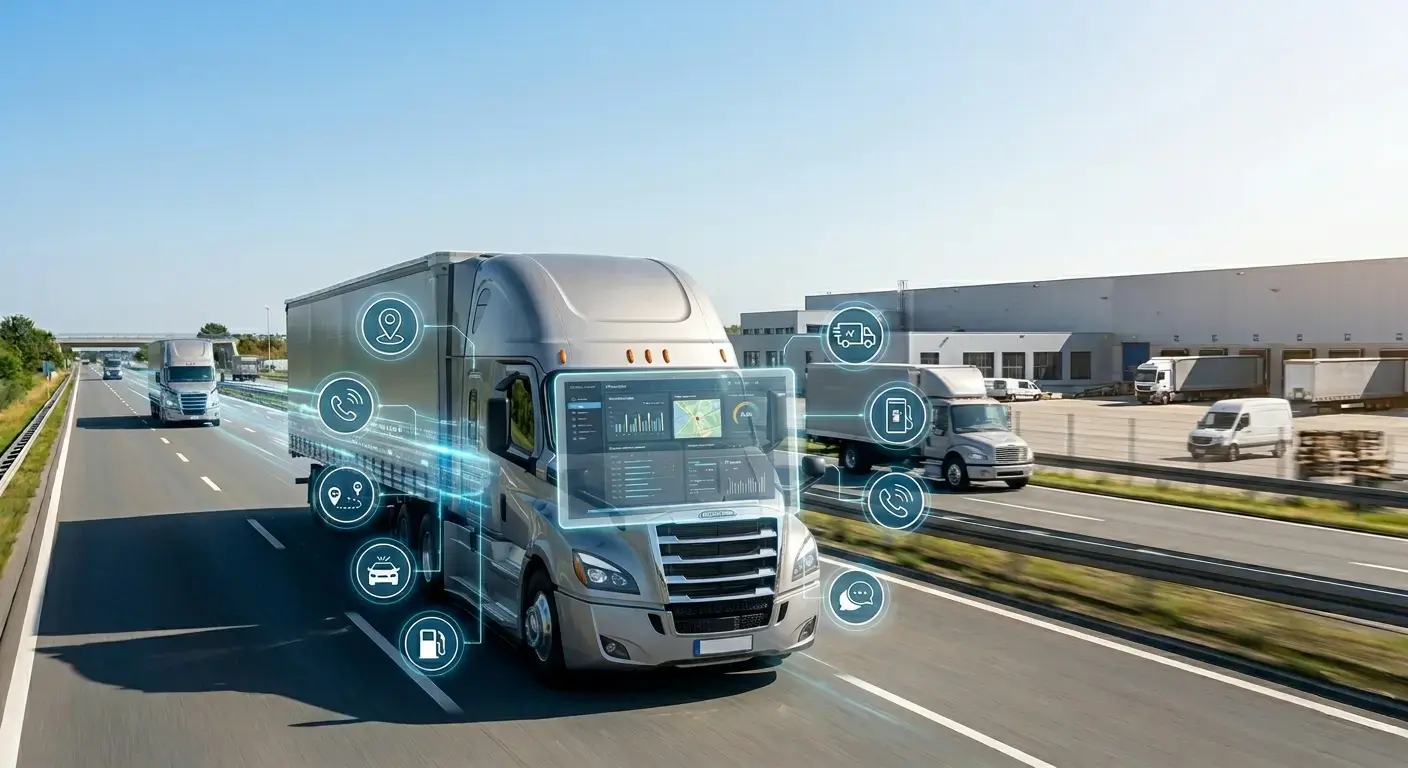
Early fleet management systems were built to answer a simple question: Where is the vehicle? Modern fleet platforms still do that, but they also help organizations monitor vehicle health, streamline inspections, improve communication and make better operational decisions. For example:
-
Vehicles automatically generate diagnostic information, helping teams monitor vehicle health.
-
Digital inspection records can be completed and shared online, reducing paperwork and administrative effort.
-
Telematics systems capture vehicle activity automatically, providing real-time operational visibility.
-
Maintenance teams receive alerts about developing issues, allowing them to address problems sooner.
- Managers can access information from drivers, vehicles, assets and workflows through a unified platform, making it easier to stay informed and coordinate operations.
Several advances have reshaped fleet operations:
-
Automated data collection from connected vehicles and assets
-
Real-time access to vehicle diagnostics and maintenance information
-
Digital inspection and compliance workflows
-
Integration between operational, maintenance, safety and compliance systems
-
Analytics tools that help identify trends across the fleets
As fleet technologies become more connected, information moves more freely across the organization. When teams have easy access to the data they need, they can make faster decisions, solve problems sooner and keep operations running smoothly.
How visibility improves coordination and response
The value of fleet technology often lies in giving managers earlier awareness of emerging issues. That visibility makes it possible to address problems before they become costly failures. Considering that reactive repairs that cost 3–9 times more than preventive maintenance, the savings are substantial.
The benefits of early visibility extend across many areas of fleet operations:
Vehicle diagnostics spot problems early, before they turn into roadside failures. Using reports about how assets are used helps managers see if everything is running smoothly across the operation. Keeping an eye on idle time also reveals great chances to save fuel and reduce engine wear.
Managers have access to objective operational information. Driver behavior metrics provide insight into speeding, harsh braking, rapid acceleration and other indicators that may warrant coaching or additional training.
Organizations maintain more consistent documentation and reduce the administrative effort required to track regulatory requirements.
How data supports better long-term decisions
Sharing daily visibility allows fleets to quickly handle immediate operational challenges. Over time, this same information becomes an essential and trusted resource for planning ahead.
Modern fleets gather a wealth of data from vehicles, drivers, inspections, maintenance and daily operations. These records illustrate how the organization functions and evolves over months and years.
Then, patterns begin to emerge.
Managers have the opportunity to recognize assets whose maintenance costs are increasing, gain insights into utilization patterns across different locations, compare how vehicles perform, assess the effects of safety initiatives and see how operational changes influence results.
These insights support decisions such as:
-
Vehicle replacement planning
-
Capital allocation
-
Staffing levels
-
Training investments
-
Asset utilization strategies
-
Maintenance program adjustments
The value comes from connecting information to decisions.
Organizations really thrive when operational information guides leaders to make smarter investment choices, better allocate resources, enhance processes and adjust to changing conditions over time. This way, they create even more value and stay ahead of the curve.
Solution providers are driving fleet technology forward.
Fleet solution providers are here to help organizations make the most of their technology investments. By truly understanding a customer’s industry, operational priorities and daily challenges, they can guide them from initial implementation to long-term success.
Their role extends beyond deploying technology. They connect fleet data to meaningful business outcomes, including reduced downtime, stronger compliance, lower operating costs and safer operations. As connected technologies become more central to fleet management, this expertise grows increasingly valuable.
For organizations interested in supporting customers through this transition, the Zonar Partner Network provides access to industry-leading fleet technology, sales resources and ongoing support designed to help partners grow their business.
Fleet technology investment will keep growing.
Technology helps organizations manage complexity.
Connected fleet technology provides visibility into operations, supports faster responses to developing issues and improves coordination across teams. Maintenance programs become more proactive. Safety initiatives become more targeted. Compliance workflows become more consistent. Planning decisions become more informed.
Every fleet technology adoption brings its own implementation steps, training needs and workflow adjustments. But organizations keep investing because having timely information really helps them make smarter decisions throughout their operations.
As more organizations embrace fleet technology, they’ll increasingly count on technology partners to guide them through complexities, align solutions with their operational goals and get the most out of their investments. Solution providers like the Zonar Partner Network are essential in turning technology capabilities into real-world results, supporting fleets as they progress from initial setup to long-term operational success.
As connected vehicles, embedded telematics, predictive analytics and integrated fleet platforms continue to advance, the importance of turning information into coordinated action will only grow. Organizations that regularly transform operational data into well-coordinated decisions will be better suited to boost their performance, embrace change and handle the challenges of an increasingly complex operating environment.
The future of fleet management is all about organizations that effectively turn visibility into meaningful action. With solutions like Zonar Bus Suite and Zonar Ignition™, Zonar leads the way in empowering fleets to connect their operations, make smarter decisions and unlock the full potential of their technology investments.