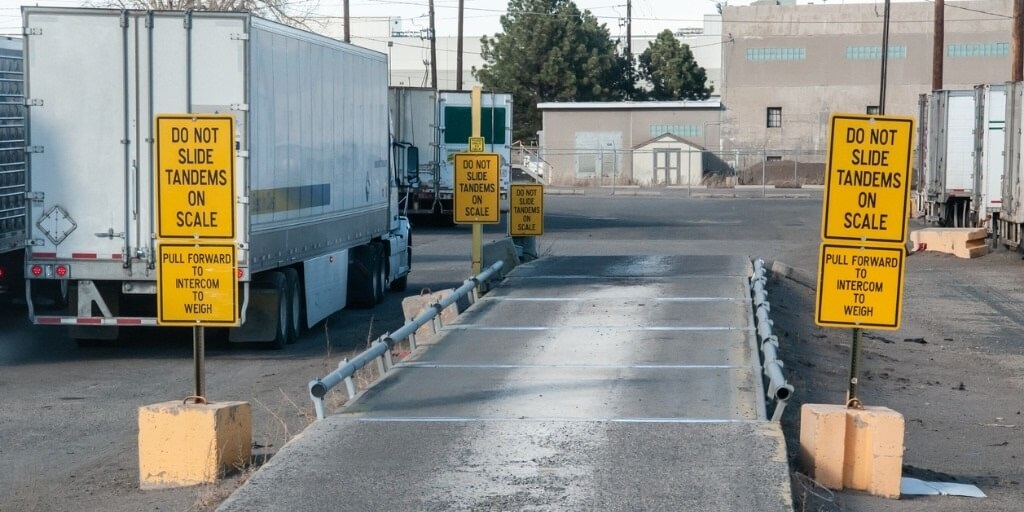
What Happens at a Weigh Station?
Weigh stations help agencies monitor commercial vehicle weight, safety, credentials, and compliance. For truck drivers and fleet managers, stopping at a weigh station can affect schedules, fuel use, and delivery timing, but these stations play an important role in protecting roads, bridges, drivers, and the public.
Because rules can vary by state, vehicle type, weight, cargo, route, and safety record, drivers should follow posted signs and current regulatory guidance whenever they approach an open weigh station.
What Is a Weigh Station?
A weigh station is a roadside inspection location where commercial vehicles may be weighed and reviewed for safety or compliance. Many weigh stations are located along highways or near state borders, where they may also be called ports of entry.
The main purpose is to help ensure that trucks are operating within legal weight limits and that vehicles are safe enough to continue on the road. Overloaded or poorly maintained trucks can create safety risks and may contribute to damage on highways, bridges, and other infrastructure.
Safety records influence inspection frequency
Weigh station rules and inspection practices can vary by state, vehicle type, weight, cargo, credentials, and safety record. Fleets with stronger compliance and safety records may experience different inspection patterns than fleets with more frequent violations, but drivers should always follow posted requirements.
What Gets Checked at a Weigh Station?
At a weigh station, officials may review a vehicle’s weight, paperwork, credentials, and safety condition. Not every truck receives the same level of inspection. Some stops may be brief, while others may involve a more detailed vehicle or driver inspection.
Depending on the situation, inspectors may review items such as:
- Driver credentials, permits, logs, inspection reports, and other required paperwork.
- Vehicle weight, axle weight, and gross weight.
- Tires, wheels, rims, and suspension components.
- Brakes, hoses, and other safety-related systems.
- Coupling devices, kingpin, fuel tank, and fuel lines.
- Seat belts, safety equipment, and hazardous materials documentation, where applicable.
If a vehicle is overweight or has a safety issue, it may be delayed, cited, or placed out of service until the problem is corrected according to the applicable rules.
Why Are Some Weigh Stations Closed?
Weigh stations may be closed for several reasons, including staffing, traffic conditions, enforcement priorities, maintenance, weather, or operational scheduling. Opening a station requires personnel to manage traffic, interact with drivers, conduct weighing, perform inspections, and issue citations when needed.
Traffic flow is also a consideration. If trucks back up from a weigh station onto the highway, that can create a safety issue for both commercial vehicles and other drivers. For this reason, station hours and inspection activity may vary.
Which Vehicles Need to Stop at Weigh Stations?
When a weigh station is open, qualifying commercial vehicles may be required to stop. The exact requirements vary by state and may depend on vehicle weight, commercial use, cargo, registration, and other factors.
Many states require commercial vehicles over a certain weight threshold to stop at open weigh stations. Some rules may also apply to empty trucks, rental trucks, or vehicles carrying certain types of cargo. Fleet managers should make sure drivers understand the requirements for the states and routes where they operate.
Drivers who are enrolled in an approved weigh station bypass program may be allowed to bypass a participating station when the system clears them to do so. However, a bypass is not guaranteed every time, and drivers must follow the instructions they receive.
What Happens if a Truck Fails to Stop?
If a driver fails to stop at a weigh station when required, the driver or carrier may face citations, fines, inspection delays, or other enforcement action. An officer may also direct the vehicle back to the station for review.
Skipping a required weigh station can create unnecessary compliance risk for both the driver and the fleet. Fleet managers should train drivers to follow posted signs, bypass-system instructions, and applicable state requirements.
How Trucks Can Legally Bypass Weigh Stations
Some fleets use weigh station bypass programs to reduce unnecessary stops. These programs allow eligible vehicles to bypass participating weigh stations when certain criteria are met.
Eligibility may be based on carrier safety record, vehicle credentials, registration data, weight information, and other program or agency requirements. Because each bypass decision depends on current conditions and compliance status, fleets should treat bypass programs as a tool for reducing unnecessary stops, not as a way to avoid inspections entirely.
Fleet teams evaluating bypass programs should review routes, participating locations, safety requirements, program costs, and expected bypass frequency before estimating value.
How Does a Truck Get Weighed?
When a truck is weighed, officials may review both axle weight and gross vehicle weight.
- Axle weight: The amount of weight carried by each axle.
- Gross weight: The combined weight carried by all axles.
Some scales require the vehicle to stop or move slowly across the scale. Other systems, often called weigh-in-motion systems, can measure weight while a vehicle moves across the equipment. The process and timing vary by station, technology, traffic volume, and whether the vehicle is selected for additional inspection.
What Happens if a Truck Is Overweight?
If a truck is found to be overweight, the driver or carrier may receive a citation, fine, or other penalty. The vehicle may also be delayed until the load is adjusted, reduced, or otherwise brought into compliance.
Penalties vary by state and by the amount of excess weight. In addition to fines, overweight violations can create delivery delays, customer-service issues, safety concerns, and added administrative work for the fleet.
How Fleets Can Prepare Drivers for Weigh Stations
Fleet managers can reduce weigh station problems by making compliance part of daily operations. Drivers should understand when they are required to stop, what paperwork they need, how to respond during an inspection, and how to follow bypass-system instructions.
Helpful steps include:
- Keeping vehicle registration, permits, and credentials current.
- Training drivers on state-specific weigh station requirements.
- Reviewing weight limits and load distribution before dispatch.
- Maintaining inspection records and required documentation.
- Using telematics and reporting tools to monitor routes, mileage, and vehicle activity.
- Evaluating bypass programs where they make operational sense.
How Zonar Can Help
Zonar helps fleet teams bring vehicle, driver, asset, and operational data into clearer view. With fleet management, GPS tracking, reporting, and integration capabilities, Zonar can help organizations improve route visibility, support compliance workflows, and make more informed decisions across daily operations.
To learn how Zonar can support your fleet management goals, contact the Zonar team.