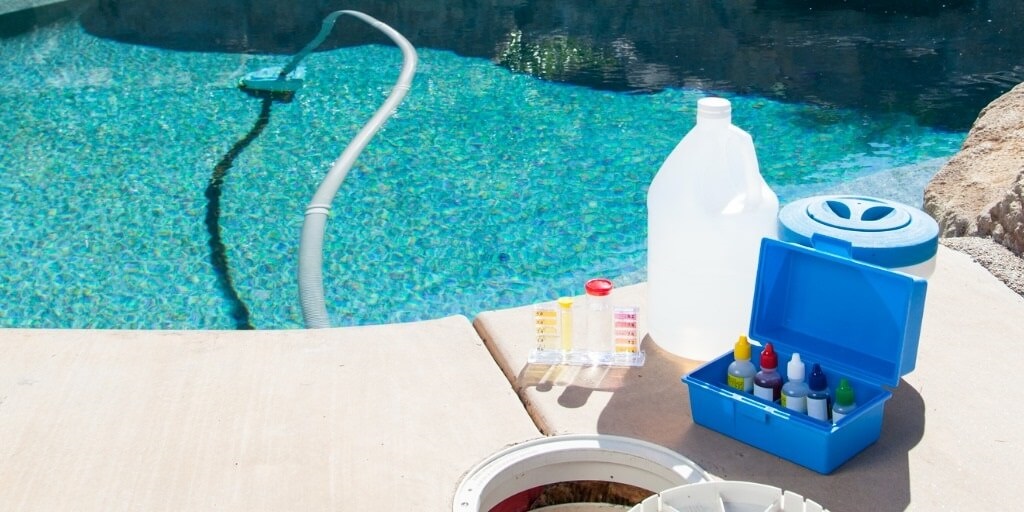
Pool Service Business Regulations and Chemicals
Pool service businesses manage more than recurring service routes. They also handle chemicals, equipment, vehicles, customer schedules, employee safety, and local operating requirements. Because pool chemicals can be hazardous when stored, transported, mixed, or handled incorrectly, pool service companies need clear procedures before technicians begin their routes.
Pool chemical rules, transport requirements, licensing expectations, and documentation needs can vary by jurisdiction and chemical type. Service businesses should confirm requirements using current federal, state, and local guidance, and consult qualified safety, legal, or compliance resources when needed.
Why Pool Chemical Safety Matters
Pool chemicals such as chlorine, bromine, pH adjusters, algaecides, and other treatment products help maintain water quality and reduce the spread of germs in pools, hot tubs, and other treated recreational water facilities. When used correctly, these chemicals support cleaner and safer swimming environments.
However, pool chemicals can create risks if they are mixed improperly, stored incorrectly, transported without appropriate precautions, or handled without proper protective equipment. Exposure can affect technicians, lifeguards, maintenance workers, customers, delivery workers, and others who may be near the chemicals or treatment area.
Chemical safety starts before the route begins
Pool service companies should make sure technicians understand safe handling procedures, required protective equipment, emergency response steps, labeling requirements, storage expectations, and company policies before they begin service calls.
Pool Service Regulations and Local Requirements
Pool service requirements can vary by state, county, municipality, and facility type. Public pools, commercial aquatic facilities, residential pools, spas, and water parks may be subject to different inspection, water-quality, chemical-storage, and operator-training requirements.
In many areas, health departments or local agencies inspect public or commercial swimming facilities to confirm that water quality, chemical levels, equipment, and safety practices meet applicable standards. Pool service providers should understand which requirements apply to the facilities they maintain.
Companies should also review current guidance from public health agencies, occupational safety resources, chemical manufacturers, and local regulators. Product labels and safety data sheets should be available to technicians and followed carefully.
How Pool Service Companies Track Workers and Vehicles
Pool service businesses often manage multiple technicians, trucks, tools, and chemical supplies across many customer locations each day. GPS fleet tracking can help managers see where vehicles are, how routes are progressing, and whether technicians arrived at scheduled service locations.
This visibility can support dispatching, customer communication, proof of service, and route planning. If a customer calls to ask when a technician will arrive or whether a service visit was completed, GPS tracking and location history can give managers better information.
Fleet tracking can also help businesses review time on site, route efficiency, idle time, and unauthorized vehicle movement. This is especially useful for small and mid-sized service businesses that need to manage field activity without constant phone calls to technicians.
Pool Chemicals, Equipment, and Theft Risk
Pool service vehicles may carry chemicals, tools, testing equipment, pumps, hoses, and other valuable materials. Because these items may be stored in vehicles or moved between customer sites, businesses should have policies for inventory control, vehicle security, chemical storage, and incident reporting.
GPS tracking can help managers monitor vehicle location and identify unexpected movement, but it should be treated as one part of a broader asset protection process. Secure storage, technician training, inventory records, and clear handling procedures are also important.
If a vehicle, tool, or chemical inventory issue occurs, location history may help managers review where the vehicle traveled, when stops occurred, and whether the incident should be escalated internally or to law enforcement.
Using GPS Tracking to Support Pool Service Operations
GPS fleet tracking can support several pool service workflows, including route management, customer service, technician accountability, and vehicle maintenance.
- Route visibility: See where technicians are during the day and how service routes are progressing.
- Proof of service: Review arrival and departure activity at customer locations.
- Customer updates: Provide more accurate ETAs when customers ask about appointment timing.
- Driver behavior: Monitor speeding, harsh braking, rapid acceleration, and idling to support coaching.
- Geofencing: Create virtual boundaries around customer sites, yards, storage areas, or restricted locations.
- Maintenance planning: Use mileage or engine-hour data to support more consistent vehicle service.
- Asset visibility: Help locate vehicles and equipment when they move unexpectedly or are difficult to find.
Improving Customer Service With Fleet Visibility
Pool service businesses rely on recurring customer trust. Customers want to know that their pools were serviced on schedule, that technicians arrived when expected, and that issues were handled professionally.
GPS tracking can help service managers answer customer questions more quickly. Location history can show whether a technician visited a property, how long the vehicle was nearby, and when the technician left for the next stop.
When paired with work orders, photos, technician notes, water testing records, or service forms, fleet tracking can support a more complete proof-of-service process.
Safety and Compliance Practices for Pool Service Fleets
Fleet tracking can support operational visibility, but chemical safety depends on proper training, policies, and procedures. Pool service companies should make sure technicians understand how to transport, store, and handle chemicals safely.
Important practices may include:
- Keeping chemicals properly labeled and secured during transport.
- Following product labels and safety data sheets.
- Separating incompatible chemicals.
- Using required personal protective equipment.
- Training technicians on spill response and emergency procedures.
- Documenting customer service visits and chemical use when required.
- Reviewing applicable transport, storage, and workplace safety requirements.
- Maintaining vehicles so chemicals and equipment can be transported safely.
Requirements can vary by location and chemical type. Companies should verify current rules before changing chemical storage, transport, or service procedures.
How Zonar Can Help Pool Service Fleets
Zonar helps service businesses bring vehicle, driver, asset, and operational data into clearer view. With fleet management, GPS tracking, geofencing, reporting, maintenance, alerts, and driver visibility tools, Zonar can help pool service companies improve route visibility, support customer communication, monitor vehicle activity, and make more informed decisions across daily operations.
Fleet tracking is one part of a broader safety and compliance program. Pool service businesses should continue to follow applicable chemical-handling, transport, worker-safety, and local operating requirements.
To learn how Zonar can support your pool service fleet and field operations, contact the Zonar team.