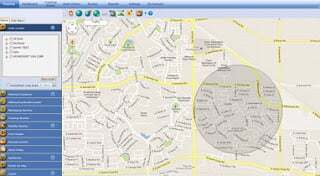
Geofences give fleet teams a practical way to monitor when vehicles enter or leave important locations. By drawing a virtual boundary around a yard, customer site, job site, restricted area, or service zone, managers can create alerts tied to real vehicle movement.
For dispatchers and fleet managers, this adds a useful layer of context. Instead of only knowing where a vehicle is, they can understand whether it has arrived, departed, crossed a boundary, or entered an area that requires attention.
How geofences work
A geofence is a virtual perimeter created on a map. It can be shaped around a specific address, facility, region, or route area. When a vehicle crosses that boundary, the fleet management system can record the event and notify the appropriate team.
Common geofence use cases
- Monitoring vehicles as they enter or leave a fleet yard.
- Confirming arrival and departure at customer locations.
- Identifying unauthorized use after hours.
- Tracking activity around restricted or high-risk areas.
- Improving visibility into job site or service area activity.
Using geofences to reduce unauthorized use
Unauthorized vehicle use can increase fuel costs, create liability risk, and add unnecessary wear to fleet assets. A geofence around a parking area, driver home base, or restricted location can help managers identify activity that falls outside expected operations.
Yards, depots, and home-based vehicles
For vehicles that should remain parked after hours, geofence alerts can help teams know when a vehicle leaves a defined area. For vehicles taken home by drivers, geofences can support clear policies around approved use and work-hour activity.
Using geofences to improve service visibility
Geofences are not only about preventing negative behavior. They can also help teams confirm positive activity, such as arriving at a customer site on time or completing service in the expected location.
When combined with fleet tracking and reporting, geofencing can help improve dispatching, customer communication, asset protection, and driver accountability.